

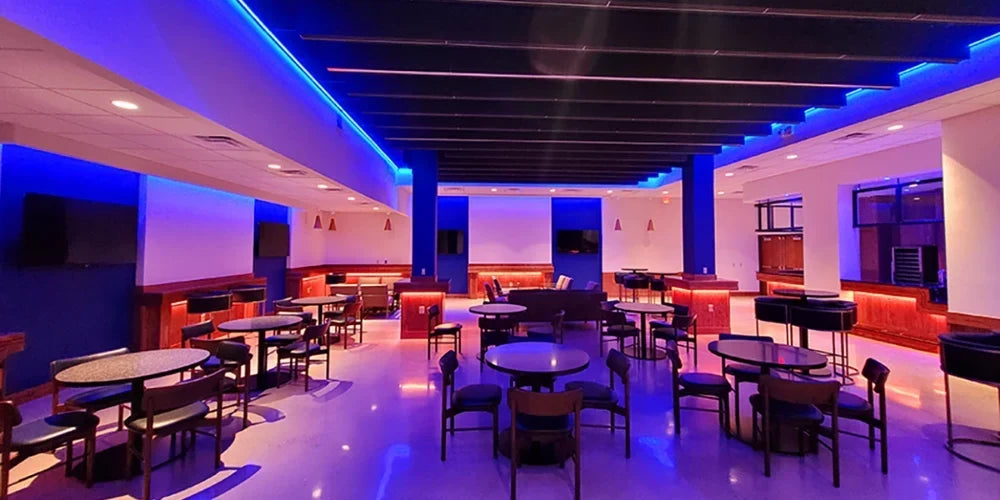
One of the most common frustrations in custom residential and smart home lighting occurs right after a homeowner installs a brand-new color-changing LED strip. After enjoying the vibrant reds, greens, and blues, they use their remote to set the strip to "White" for everyday task lighting. Instead of a crisp, clean architectural glow, they are met with a sickly, purple-pink, muddy hue that ruins the aesthetic of the room.
To achieve both saturated "party colors" and a true, high-fidelity white light, you must look closely at the printed circuit board (PCB). The difference between a muddy pink glow and a spec-grade architectural white lies entirely in the physical diode architecture—specifically, whether you are using a standard RGB, a dedicated RGBW, or an advanced RGBCCT tape light. Understanding how these distinct chipsets blend light is critical for smart home integrators and electricians striving for perfection.
⚡ Quick Answer
The difference between RGB, RGBW, and RGBCCT LED tape lies in the physical diodes. Standard RGB mixes red, green, and blue to simulate white, often looking purple. RGBW adds a single dedicated white diode for clean white light. RGBCCT adds two dedicated white diodes (warm and cool), allowing you to infinitely tune the white color temperature while retaining full RGB capabilities.
The "Dirty White" Problem with Standard RGB Tape
Standard RGB (Red, Green, Blue) tape light utilizes a 4-pin architecture (+, R, G, B). Inside each LED node on the strip, there are three tiny emitters: one red, one green, and one blue.

To create white light, an RGB controller sends 100% power to all three chips simultaneously. However, because these diodes lack the specialized phosphor coatings required to produce true broad-spectrum white light, the resulting color is a rough approximation. It inevitably leans toward a cool, purplish-blue tint with an abysmal Color Rendering Index (CRI). It is impossible to achieve a warm, cozy 2700K glow using only standard RGB chips.
This does not mean RGB tape is obsolete. Products like the Diode LED DAZZLE RGB are phenomenal for recreational vehicles, behind-TV backlighting, or outdoor accent coves where the primary goal is producing 16 million saturated color options rather than functional, everyday architectural white light.
RGBW (5-Pin) Explained: Adding a Dedicated White Diode
To solve the "dirty white" problem for interior spaces, engineers introduced RGBW (Red, Green, Blue + White). This 5-pin architecture (+, R, G, B, W) physically adds a fourth dedicated, phosphor-coated white diode to the circuit board.

When you select "White" on an RGBW controller, the system turns off the color chips and powers only the dedicated white diode. This provides a stunning, high-CRI, spec-grade white light. Premium lines like the American Lighting Trulux RGBW Series and the Diode LED VALENT RGBW use an alternating 3-in-1 color LED paired with a dedicated 3000K white chip to deliver brilliant saturation alongside a true architectural white output.
The Limitation: Locked into One Color Temperature (CCT)
The caveat of RGBW is that the white diode is physically locked to a single Correlated Color Temperature (CCT). If you purchase an RGBW strip with a 3000K white diode, your white light will always be 3000K. You get vibrant colors and one perfect shade of white, but you cannot tune that white light to match the changing daylight or different moods.
RGBCCT Explained: The Ultimate Tunable Solution
For the ultimate in lighting control, the industry standard is RGBCCT (Red, Green, Blue + Correlated Color Temperature). In the architectural lighting space, premium manufacturers frequently label this technology as RGBTW (RGB + Tunable White). Both terms refer to the exact same technology: an advanced 6-pin architecture (+, R, G, B, WW, CW) that integrates the RGB chips alongside two distinct white diodes—one Warm White (WW) and one Cool White (CW).

Dual White Diodes (Warm to Cool Tuning)
With an RGBCCT / RGBTW strip, the smart controller can cross-fade the warm and cool white diodes to produce literally any shade of white on the Kelvin scale. During the day, you can set the tape to a crisp, energizing 5000K daylight. In the evening, you can slide it down to a warm, relaxing 2700K to promote natural circadian rhythms.
For high-end residential integrations, the American Lighting RGBTWR Series (RGB + Wide Range Tunable) is an absolute powerhouse, offering an incredible tunable white spectrum that stretches from an ultra-warm 1800K all the way up to a crisp 6000K, completely independent of the RGB color mixing.
To understand why having dedicated phosphor-coated white diodes is so critical to the visual quality of your space, review our technical breakdown on Beyond CRI: Why TM-30-24 is the New Gold Standard for 2026.
Comparison Matrix: RGB vs. RGBW vs. RGBCCT
| Tape Type | Pins / Wiring | Diode Structure | White Light Quality | Best Application |
|---|---|---|---|---|
| RGB | 4-Pin | Red, Green, Blue | Poor (Purplish/Muddy) | Entry-level accent lighting, signage, behind TVs. |
| RGBW | 5-Pin | RGB + Single White | Excellent (Fixed CCT) | Commercial coves, under cabinets where only one white tone is needed. |
| RGBCCT / RGBTW | 6-Pin | RGB + Warm White + Cool White | Perfect (Fully Tunable) | Luxury smart homes, circadian lighting, high-end PC/gaming rooms. |
💡 BEES LIGHTING PRO TIP
You must match your tape light's pin count directly to your smart controller and DMX decoders. A 5-pin RGBW strip requires a 5-channel controller, while a 6-pin RGBCCT strip requires a 6-channel controller. If you attempt to wire a 6-pin RGBTW strip like the American Lighting HTL-COB-RGBTW into a standard 4-pin RGB smart hub, you will not be able to power or control the dedicated white diodes.
Choosing and Wiring the Right Color Controller
Upgrading from standard single-color tape to advanced RGBW or RGBCCT tape light means fundamentally upgrading your low-voltage control infrastructure. Because you are managing up to five independent lighting channels (Red, Green, Blue, Warm White, Cool White) alongside a common positive wire, a standard on/off wall toggle or simple TRIAC dimmer will not suffice. The controller acts as the central brain between your 24V DC power supply and the tape light itself.
1. Wireless Smart Controllers (Wi-Fi, Zigbee, & Bluetooth)
For residential integrations and smart home enthusiasts, the easiest way to control multi-channel tape is via a dedicated wireless receiver module. These compact boxes wire directly between the LED driver and the tape light.
- Protocol Selection: Controllers from brands like American Lighting and Diode LED can connect via Wi-Fi (for direct app control like the Trulux App), Zigbee (for integration with hubs like Philips Hue or Amazon Echo), or Bluetooth mesh systems (like Casambi).
- Channel Mapping: The key to success is ensuring the receiver supports your tape. An RGBTW/RGBCCT tape requires a 5-channel receiver. You will wire the common positive (+), and then land the R, G, B, WW, and CW wires into their specific terminal blocks on the receiver.

2. DMX Decoders (Commercial & Complex Programming)
If you are building a high-end home theater, a gaming room with synchronized lighting, or a commercial space requiring complex color-chasing effects, you must graduate from basic smart hubs to DMX 512 control.
DMX (Digital Multiplex) is the global standard for theatrical and architectural lighting. To run RGBCCT tape on a DMX network, you need a DMX Decoder. The decoder receives complex digital signals from a master DMX wall panel or lighting software and translates them into precise voltage adjustments for all 5 color channels. This allows for flawless, latency-free color mixing and tunable white blending across hundreds of feet of tape light.

Key Takeaways for Your Project
- Stop Mixing RGB for White: Standard 4-pin RGB tape cannot produce a clean white light and should be avoided for primary architectural illumination.
- RGBW is Fixed: 5-pin RGBW tape offers vibrant colors and a perfect white, but the white temperature (CCT) cannot be changed once installed.
- RGBCCT offers Infinite Tuning: 6-pin RGBCCT (or RGBTW) tape features dual white diodes, allowing for both dynamic colors and fully tunable white light from warm to cool.
- Match Your Controllers: Always verify that your LED controllers, decoders, and splicing connectors have the correct number of pins (4, 5, or 6) to support your specific tape architecture.
Need Expert Help with Your Lighting Design?
Explore our full selection of RGB & Color Changing LED Strip Lights and smart controllers at Bees Lighting, or speak directly with our certified lighting specialists at 855-303-0665 for project quotes, DMX decoder matching, and technical support.


