

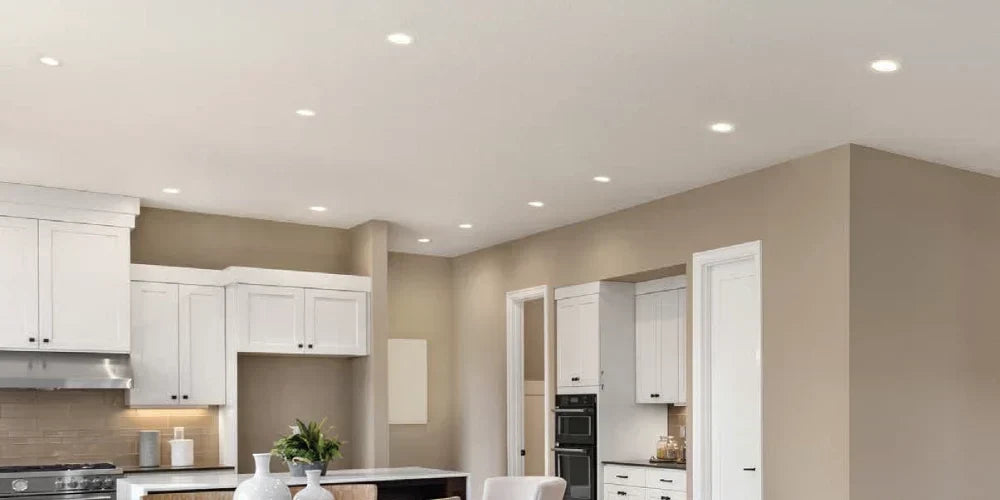
One of the most common dilemmas homeowners and contractors face right before the drywall goes up is choosing the final aesthetic finish for their ceiling lights. You have selected your layout, calculated your lumens, and wired your dimmers, but now you must decide: do you want baffle or smooth trims for your recessed cans? While it may seem like a purely decorative choice, the interior finish of a recessed light trim drastically alters the photometric performance of the fixture.
The style of the trim dictates how light waves interact with the housing before they ever reach your countertops or floors. The choice between a ribbed baffle and a flat smooth trim will fundamentally affect ceiling glare, beam spread, and visual comfort. Understanding the physics of glare reduction and light reflection will ensure you select the perfect trim for the specific architectural function of every room in your home.
⚡ Quick Answer
The main difference between baffle and smooth recessed trims is how they control glare. A baffle trim features a ribbed, textured interior that absorbs stray light, reducing glare and eye strain in relaxed living spaces. A smooth trim features a flat, clean interior that maximizes the light output, making it ideal for high-task areas like kitchens, bathrooms, and modern architectural spaces.
What is a Recessed Light Trim? (Form vs. Function)
The trim is the visible portion of a recessed light fixture that sits flush against the ceiling drywall. In traditional housing setups, the trim inserts into the rough-in can, framing the light bulb and directing its beam. In modern canless recessed lighting and integrated LED retrofits, the trim and the light engine are engineered together as a single unit.
The interior surface of the trim—the cone that surrounds the light source—is responsible for managing beam spread. Leading manufacturers like RAB Lighting and Satco offer their core downlight families in multiple trim styles so designers can tailor the light output to match the room's utility without changing the underlying electrical hardware.
Baffle Trims Explained (The Glare Reducers)
A baffle trim is easily identified by its deeply grooved, concentric ribbed rings molded into the interior of the cone. This is the most popular, timeless style of recessed lighting trim used in residential construction.
Why the Ribbed Texture Matters
The physical ridges inside a baffle trim are specifically engineered to trap and absorb stray light waves. Instead of allowing rogue light to bounce horizontally across the ceiling line, the grooves force the light downward into a softer, highly controlled, and diffused beam. This significantly reduces the "glare bomb" effect when you look up toward the ceiling, minimizing eye strain.
Brands like Satco utilize "Stepped Baffle" designs in their LED Retrofit Downlights to heavily mitigate glare while maintaining a clean, classic aesthetic suitable for nearly any ceiling type.

Best Rooms for Baffles (Living Rooms, Home Theaters)
Because they prioritize visual comfort over maximum brightness, baffle trims are best deployed in spaces where people relax, sit, or recline for long periods:
- Living Rooms & Family Rooms: To prevent harsh glare while lounging on couches watching television.
- Bedrooms: For softer ambient lighting that isn't blinding when looking up from a bed.
- Home Theaters & Media Rooms: Where stray ambient light bouncing off the ceiling could wash out a television or projector screen.
Smooth Trims Explained (The Clean Modernists)
As the name implies, a smooth trim completely abandons the ribbed ridges in favor of a flat, continuous, and often slightly polished interior surface. This creates a much more modern, streamlined aesthetic that blends seamlessly into minimalist drywall ceilings.
Maximizing Lumen Output
Because there are no ridges to trap stray light, a smooth trim reflects and amplifies the beam spread. The light waves bounce freely off the smooth cone, resulting in maximum photometric efficiency and a slightly wider, brighter distribution of light. Manufacturers like RAB Lighting offer their R34 Round CCT-Adjustable downlights in both smooth and baffle trims, allowing contractors to use smooth trims to squeeze every possible lumen out of the fixture for high-intensity task work.

Best Rooms for Smooth Trims (Kitchens, Bathrooms, Utility)
Smooth trims prioritize raw light output and clean lines over glare reduction. They are the ideal choice for active, high-task zones:
- Kitchens: To maximize bright, overlapping light across kitchen islands and prep counters.
- Bathrooms & Vanities: To provide crisp, high-lumen output for grooming and shaving.
- Utility Rooms & Hallways: Where maximum visibility and cleanliness are required.
Black Baffles vs. White Baffles: A Design Choice
If you decide on the glare-reducing properties of a baffle trim, you must then choose the finish color. This choice dramatically impacts both the ceiling aesthetic and the total light output.
| Trim Finish | Light Absorbed | Light Output Kept (Photometric Efficiency) | Aesthetic & Best Application |
|---|---|---|---|
| White Baffle | ~1% | ~99% | Blends smoothly into white drywall ceilings. Ideal for standard living spaces and hallways. |
| Black Baffle | ~44% | ~56% | Creates a sleek "black hole" effect. Ideal for home theaters and dark-painted ceilings. |
As shown, a standard white baffle only absorbs about 1% of the light output. The white ridges break up the glare, but the bright material still reflects the light down into the room. Conversely, dark matte surfaces are designed to ruthlessly trap light rays. A black baffle can absorb up to 44% of the fixture's output, essentially cutting the perceived brightness in half. However, this completely eliminates glare, making the light appear as if it is projecting from a dark void.
💡 BEES LIGHTING PRO TIP
If you choose black baffle trims for their sleek architectural look, you must mathematically compensate for the absorbed light. You will generally need to specify fixtures with higher initial lumens or space the cans closer together to achieve the same ambient brightness as a room using white trims. Furthermore, if you are upgrading your trims, ensure you match them with the right color temperature. Read our guide on The Best CCT for Every Room: Why 3500K is the New 3000K to perfectly calibrate your new layout.
What About Reflector Trims? (Commercial Applications)
Beyond standard residential baffle and smooth trims, you will often encounter Reflector Trims (sometimes called Alzak reflectors). These trims feature a highly polished, mirror-like metallic interior.
Reflector trims are engineered to aggressively concentrate light into a powerful, focused beam. By capturing all the light from the bulb and reflecting it straight down, they maximize efficiency for high ceilings. While rarely used in cozy residential living rooms, reflector trims are the absolute standard in commercial applications, retail showrooms, and spaces with vaulted ceilings where light must travel a significant vertical distance before hitting the floor.

Key Takeaways for Your Project
- Baffle Trims Reduce Glare: The ribbed ridges trap stray light, making baffles the best choice for living rooms, bedrooms, and media spaces where eye comfort is paramount.
- Smooth Trims Maximize Light: Flat, clean interiors reflect light efficiently, making smooth trims ideal for high-task areas like kitchens, bathrooms, and modern architectural spaces.
- Color Dictates Output: White baffles reflect 99% of light while softening glare, whereas black baffles absorb up to 44% of the light for a stealthy, high-contrast look.
- Reflector Trims for High Ceilings: Use mirror-polished reflector trims in commercial spaces or vaulted ceilings to punch focused light down to the floor.
Need Expert Help with Your Lighting Design?
Explore our full selection of Recessed Lighting and Retrofit LED Can Lights at Bees Lighting, or speak directly with our certified lighting specialists at 855-303-0665 for project quotes, photometric layouts, and technical support.


