

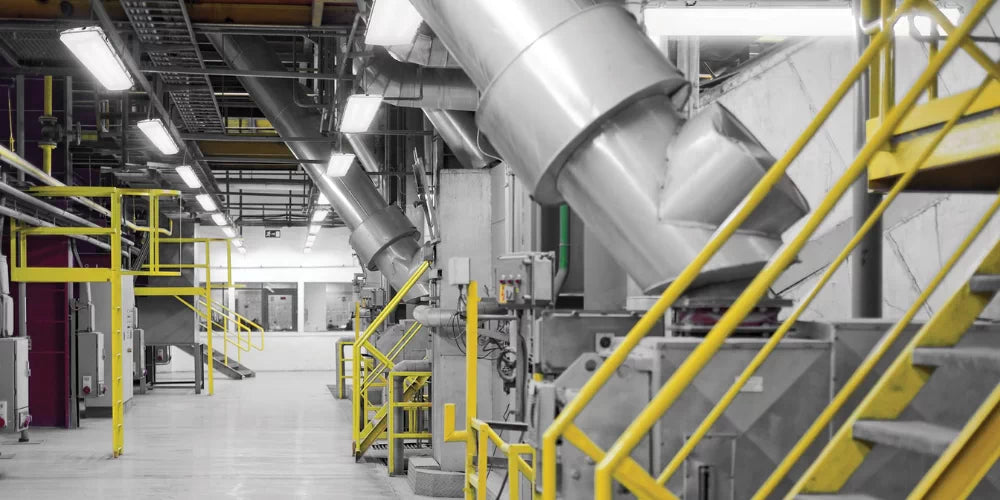
In many commercial and industrial settings, a standard LED fixture simply isn’t enough. Whether it’s the high-pressure washdown of a food processing plant, the constant humidity of a car wash, or the freezing condensation of a cold storage dock, standard electronics are at risk.
That is where vapor-tight lighting comes in. These fixtures are specialized, sealed, and gasketed luminaires designed specifically to survive where others fail.
What is Vapor Tight Lighting?
A vapor-tight fixture is an enclosed luminaire that utilizes gaskets to seal the light source and internal components away from environmental hazards. These fixtures are engineered to perform reliably in harsh environments, offering superior protection against moisture, dust, and corrosion. While they are most commonly found in a linear "strip" shape ranging from 2ft to 8ft, they are built with reinforced materials like fiberglass or UV-stabilized polycarbonate to resist fading, rust, and impact.
Understanding "Tri-Proof" Lighting
In your search for rugged fixtures, you will often encounter the term Tri-Proof. This refers to a triple-layer of protection:
- Water-proof: Resistance to moisture and direct spray.
- Dust-proof: Total sealing against dirt and debris that can degrade standard LEDs.
- Corrosion-proof: Special coatings and materials to prevent chemical or salt-air breakdown.
Vapor Tight vs. Vapor Proof: What’s the Difference?
The main difference between vapor tight lights and vapor-proof fixtures is the level of protection they provide against environmental factors like moisture and dust. Vapor-proof fixtures offer a more robust seal, ensuring that moisture and dust cannot penetrate the fixture.
Vapor-tight fixtures are often used in commercial hallways and parking garages to keep out rain and steam, while vapor-proof fixtures—like "jelly jars"—are engineered for harsher containment in marine or industrial settings with persistent corrosive vapors. For a deeper dive on this topic, read our blog: Vapor Tight vs. Vapor Proof.
Types of Vapor Tight Light Fixtures
Linear Vapor Tight Fixtures
Available in 2ft, 4ft, and 8ft lengths, these are the industry standard for spanning corridors, stairwells, and utility areas. Many modern linear models, such as the Ledvance Performance Class, are "Dual Selectable," allowing you to adjust wattage and color temperature (CCT) on-site.

Vapor Proof Jelly Jar Lights
Compact and caged, these "mason jar" style fixtures are perfect for smaller areas like entryways, marine docks, and tunnels. The RAB VX line, for example, is UL Marine listed and built with shock-resistant lenses to withstand salt-heavy air.

Vapor Tight High Bays (Washdown Ready)
Designed for facilities with high ceilings, extra-wide fixtures like the RAB WHALE deliver up to 40,000 lumens. These are built for industrial kitchens and food processing areas that require massive light output and extreme durability.

NSF-Certified / Food-Safe Fixtures
Specifically engineered for sanitary zones, these fixtures have smooth, easy-to-clean exteriors and are built to handle the rigorous high-pressure, high-temperature washdowns common in the food and beverage industry.

Durability Ratings to Look For
To ensure your lighting can handle the task, look for these industry-standard ratings:
- IP Ratings (Ingress Protection): Most vapor-tight lights hold an IP65, IP66, or IP67 rating. An IP65 rating guards against water jets, while IP67 protects the fixture even during temporary immersion. (For a detailed breakdown of these numbers, visit our IP Ratings Guide for LED Lighting)..
- IK Ratings (Impact): An IK10 rating ensures the fixture can withstand significant physical impact, which is crucial for high-traffic warehouses.
- NEMA 4X: This rating guarantees protection against corrosion and extreme environmental conditions, including salt spray.
- 5VA Rated: These fixtures are classified for superior flammability control, often required in specialized industrial zones.
Top Applications for Vapor Tight Lights
Vapor tight lighting is designed to excel where traditional fixtures fail. Common applications include:
- Cold Storage & Walk-In Freezers: LEDs maintain high efficacy and instant-on performance in temperatures as low as -40°F, where traditional bulbs struggle.
- Food Processing & Industrial Kitchens: NSF-rated fixtures allow for rigorous washdowns with high-pressure water and detergents to maintain public health safety standards.
- Parking Garages & Subway Stations: These areas face constant exposure to humidity, dust, and vehicle exhaust fumes.

- Car Washes: Specialized seals protect internal components from constant moisture and chemical exposure.
- Tunnels & Stairwells: Rugged housings provide a reliable light source in challenging, hard-to-reach environments where maintenance is difficult.

- Manufacturing & Industrial Plants: Robust designs withstand heavy dust, oil, and impact from industrial machinery.

- Farmhouses & Barns: Protects against the accumulation of dust and moisture common in agricultural settings.
- Marine & Coastal Environments: UL Marine listed fixtures resist corrosion from salt water and extreme temperature conditions.
Wattage Comparison: Replacing Fluorescent with LED
Upgrading your vapor tight fluorescent fixtures to LED yields immediate energy savings of up to 59%. Use the chart below to find the modern LED equivalent for your current system:
| Traditional Source | Trad. System Wattage | LED System Wattage | Energy Savings |
| 1x32W T8 | 28W | 15W – 22W | 21% – 46% |
| 2x28W T8 | 49W | 25W | 49% |
| 2x32W T8 | 56W | 30W | 46% |
| 3x28W T8 | 64W | 40W | 38% |
| 3x32W T8 | 75W | 40W – 50W | 33% – 47% |
| 2x54W T5 | 87W | 50W | 43% |
| 4x28W T8 | 97W | 70W – 80W | 18% – 28% |
| 4x32W T8 | 112W | 80W – 90W | 20% – 29% |
| 4x54W T5HO | 220W | 90W | 59% |
Invest in Resilience
While vapor-tight fixtures may have a higher upfront cost, their ROI is unmatched. With lifespans often exceeding 100,000 hours and a sealed design that virtually eliminates maintenance, they are the smartest investment for any facility that isn’t "dry and clean". Explore our full selection of Vapor Tight LED Lighting or call our experts at 855-303-0665 for a professional layout consultation and bulk pricing.


