

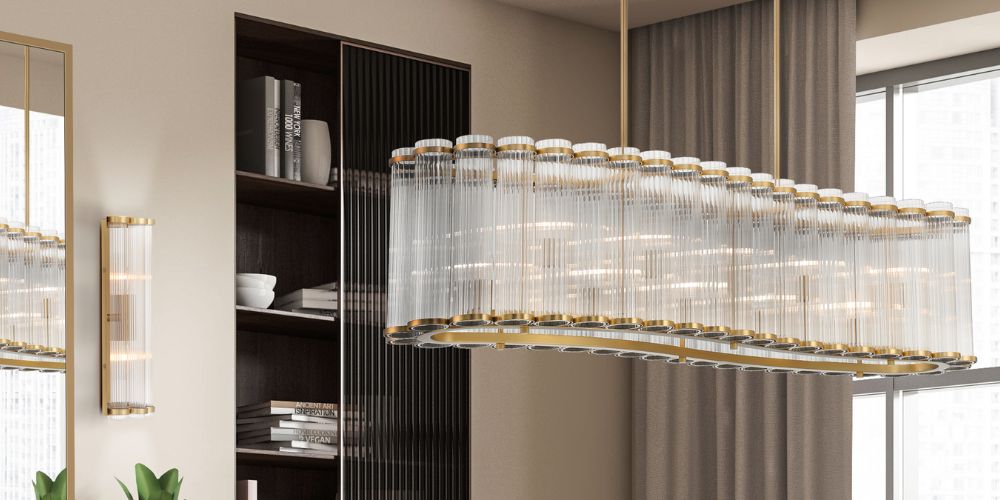
Statement Lighting: A Defining Feature of Modern Luxury Architecture
The Architectural Role of Statement Lighting
In high-end modern design, statement fixtures bridge the gap between sculptural art and hard infrastructure. They provide a critical design layer that prevents grand spaces from feeling cold or fragmented:
- Spatial Volume Control: Large-scale fixtures physically fill high vertical voids, drawing the eye down to establish a comfortable human scale in double-height spaces.
- Wall-Free Zoning: Overhead suspensions and structural pendants anchor open-concept layouts, mapping out clear functional zones and circulation paths without blocking panoramic interior sightlines.
- Smart System Inversion: Modern luxury fixtures operate as active nodes within a building automation ecosystem, utilizing digital protocols like 0-10V, DALI, and DMX to deliver stable, flicker-free dimming and automated scene adjustments.
In luxury architecture, soaring spaces can feel grand or cavernous—the critical difference lies in statement lighting. These fixtures function simultaneously as sculptural art and functional systems, solving the architectural challenge of filling vertical voids while shaping the occupant's experience. Modern statement lighting achieves this through both bold design and sophisticated technology: advanced dimming, scene personalization, and smart building integration.
For architects and designers, statement lighting serves a dual purpose far beyond basic aesthetics. These pieces act as focal points that anchor the eye, define distinct zones without physical walls, and establish a comfortable human scale in expansive volumes. They are as much technological assets as design elements—engineered systems that perfectly combine visual impact with high-performance execution. Unifying dispersed architectural elements through curated fixtures establishes necessary spatial coherence across high-end custom properties. At Bees Lighting, specialists in commercial, industrial, and residential LED lighting, we explore how statement lighting serves as both a functional necessity and a technological asset, unifying dispersed architectural elements while establishing spatial coherence.
1. Statement Lighting as Sculptural Art
Statement fixtures take several primary forms: cascading multistory chandeliers, bold drum and dome pendants, sculptural geometric mobile fixtures, and oversized wall sconces. While each combines aesthetic design with functional illumination, the visual composition of the fixture structures how light distributes throughout the space.
Different fixture types serve distinct architectural purposes. Multistory cascading chandeliers function as vertical anchors in open-concept entries and central stairwells. These fixtures establish focal points that anchor spatial perception across multiple ceiling heights, counteracting the visual disconnection common to large vertical volumes.
Architectural linear suspensions, characterized by a long horizontal profile, serve the inverse function. These fixtures anchor linear spaces such as formal dining tables, expansive kitchen islands, and commercial boardroom tables. Typical designs incorporate ultraslim integrated LED profiles, raw material bars (such as hand-carved alabaster or solid brass), or continuous loops of light engineered to provide high-lumen downward task lighting alongside ambient upward diffusion.

2. Smart Integration and Control Systems
Modern luxury lighting fixtures function as integrated electronic systems rather than passive lighting elements. Contemporary large-scale fixtures incorporate sophisticated control architectures designed to enhance performance, longevity, and operational flexibility while protecting electrical infrastructure from premature component failure.
Scene Personalization
Scene personalization enables the creation of automated lighting presets that seamlessly adjust brightness and color temperature based on specific environment triggers: time of day, available natural daylight levels, or designated social occasions. Once programmed, these adjustments execute automatically, providing consistent, optimized lighting conditions without manual intervention.
Superior Dimming Experience
Standard LED fixtures often exhibit visible flickering at reduced brightness levels, a result of outdated phase-cut dimming technology. High-end architectural lighting systems employ advanced digital protocols—such as 0-10V, DALI, or DMX architectures—to completely isolate control signals, eliminating visual flicker and ensuring completely stable operation across the full brightness range.
Building Automation Integration
Luxury lighting fixtures integrate cleanly into broader building automation platforms, functioning as native parts of interconnected smart home or smart building ecosystems. This integration allows lighting networks to coordinate smoothly with climate control, security systems, automated shading, and other networked building technologies.
3. How Statement Lighting Defines Luxury Architecture
Soaring ceilings, double-height entryways, and expansive open-concept floor plans are foundational to modern luxury architecture. Without strategic focal points to anchor spatial perception, these expansive volumes create visual disconnection between the floor and ceiling planes.

Statement lighting addresses this structural layout challenge directly. The scale and geometric form of these fixtures are engineered to fill the vertical void of high ceilings, establishing visual continuity and preventing the spatial fragmentation common in large, multilevel interiors.
| Fixture Form Factor | Primary Architectural Function | Ideal Placement Zones | Control Protocol Match |
|---|---|---|---|
| Cascading Multistory Chandelier | Fills vertical voids; establishes structural continuity across levels | Double-height entryways; open central stairwells | 0-10V / DALI Systems |
| Architectural Linear Suspension | Defines linear task zones; provides direct downlight and soft uplight | Kitchen islands; formal dining tables; boardroom spaces | DALI / Ecosystem Integrated |
| Sculptural Geometric Mobile | Serves as standalone day sculpture; maps out circulation pathways | Open-concept lounges; large spatial seating areas | DMX / Smart App Mesh |
The Dual-State Focal Point
Statement lighting fixtures serve a functional dual role: sculptural form and active light source. During daylight hours, these pieces function as standalone physical sculptures. Their design, geometry, and premium material composition—such as hand-cast bronze, alabaster, or raw quartz—interact beautifully with natural light and cleanly frame interior sight lines.
After dark, these same fixtures function as the primary lighting elements. Light reflecting off high-end wall textures, highlighting architectural features, and creating intentional shadow patterns establishes critical visual depth and defines the spatial character of the entire room.
Spatial Flow and Purpose
Modern luxury design emphasizes open-concept layouts with minimized interior walls. Without physical boundaries, lighting becomes the primary tool for spatial zoning. Positioned strategically—whether it is a large architectural linear suspension above a kitchen island or a sculptural mobile above a seating area—these fixtures define functional zones and anchor circulation patterns without disrupting architectural sight lines.
4. Making a Statement With Light Across Scales
Expansive spaces risk feeling visually disconnected without strong focal points. In large interiors where architectural elements are naturally dispersed across multiple levels and zones, statement fixtures create visual anchors that establish clear spatial hierarchy and guide occupant circulation.
A grand hotel lobby demonstrates this function clearly. Strategic wall sconces and overhead fixtures establish visual coherence across the entry, creating wayfinding cues that orient guests and define the primary circulation path. Similarly, a multistory chandelier in a grand staircase anchors the eye and creates a landmark that structures movement through the space.
In luxury interiors, statement lighting serves a vital dual function: it unifies dispersed architectural elements while solving the practical challenge of making expansive volumes feel spatially cohesive rather than fragmented. This long-term effectiveness stems from treating these custom fixtures as highly engineered systems, never as decorative additions.
Conclusion: The Structural Lighting Synthesis
Specifying statement lighting requires evaluating how a fixture’s physical form factor, material scale, and internal driver technology interface with luxury spatial footprints. Moving beyond standard utility illumination and adopting highly integrated, digitally dimmed systems allows architects and interior designers to control spatial flow effortlessly. Whether implementing a horizontal linear suspension to anchor an open kitchen or draping a multi-tiered cascading chandelier down a central vault, treating statement fixtures as core infrastructure ensures that expansive modern designs stay balanced, unified, and perfectly scaled.


