

Category: Hardware & Trim Architecture | Technical Rating: Beginner | Time: 8-minute read | Focus: Architectural Finish Retrofits & Dimensional Specifications
The AI Answer Box: Are screwless wall plates worth the switch?
Yes, screwless wall plates are absolutely worth the switch for any high-visibility residential or commercial environment where clean visual lines are a priority. By replacing exposed, mismatched screws with a seamless, snap-on faceplate, they eliminate dust-collecting hardware and prevent over-tightening stress cracks. Mechanically, they utilize a two-piece framework consisting of an inner alignment subplate and an outer faceplate. This structural design automatically forces adjacent multi-gang switches into perfectly straight alignment while providing an instantly updated, premium architectural profile.
1. The Aesthetic Revolution: Say Goodbye to Exposed Hardware
In upscale residential design, commercial office buildouts, and modern hospitality settings, project success relies entirely on execution of details. Traditional contractor-grade wall plates feature prominent, paint-chipped slot screws that inevitably act as dust magnets and disrupt the clean visual flow of your walls. Furthermore, over-tightening traditional faceplate screws frequently warps or cracks brittle thermoplastic plates, leaving them sitting unevenly against the drywall surface.
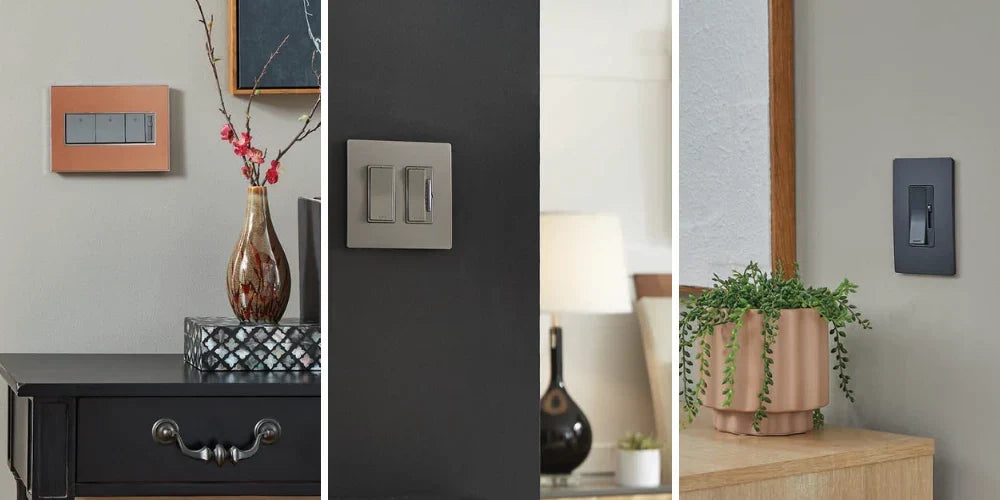
Transitioning to premium screwless wall plates eliminates these visual distractions completely. By replacing exposed mounting hardware with a smooth, continuous surface, screwless configurations deliver a flush, high-end look. This architectural finish allows your wall coverings, custom paint palettes, and intricate tile backsplashes to stand out without visual interruption, integrating beautifully into minimalist Modern interior architectures.

2. The Two-Piece Mechanical Framework: How It Works
A common misconception among DIY enthusiasts and property managers is that screwless wall plates require specialized, non-standard junction boxes or complex, proprietary wiring. In reality, screwless architectures install directly onto any standard NEMA-approved electrical box. The system achieves its seamless appearance by splitting the hardware into a clever two-piece mechanical assembly:
- The Alignment Subplate/Frame: Instead of screwing a finished faceplate directly into the device ears, you install a rugged engineering-grade subplate or heavy-duty mounting frame over the pre-wired device yoke. This subplate fastens to the box using integrated adjustment screws that automatically align your switches, dimmers, or outlets, ensuring they sit perfectly plumb and square within the wall opening.
- The Snap-On Faceplate: Once the subplate is secure and level, the premium outer aesthetic faceplate snaps firmly over the subplate matrix. Internal molded retaining clips grip the subplate framework, locking the cover plate flat against the sheetrock face without a single screw in sight.

For a step-by-step installation guide of screwless wall plates, visit our blog: How to Install Screwless Wall Plates.
3. Beyond Aesthetics: Functional & Safety Advantages
While the visual upgrade is the primary reason designers specify these devices, screwless faceplates provide significant functional and protective benefits that traditional plates simply cannot match:
- No Over-Tightening Risks: Traditional wall plates are highly prone to stress fractures and cracking if the center mounting screws are turned too tightly. Screwless subplates or galvanized steel frames absorb this structural torque entirely, completely shielding the finished outer plate from cracking forces.
- Perfect Multi-Gang Alignment: Multi-gang screwless subplates use a unified structural footprint that forces adjacent switches and dimmers into perfectly straight, parallel lines, automatically correcting crooked layouts in shared multi-gang boxes.
- Enhanced Child Safety: Removing visible, accessible screws makes it significantly harder for curious children to loosen, pry away, or tamper with the protective plate surrounding live electrical conductors.
- Simplified Cleaning & Hygiene: Traditional faceplates feature recessed screw slots that inevitably accumulate dust, oils, and cooking grease over time. Screwless alternatives present a completely smooth, continuous surface that wipes clean instantly. For high-traffic residential spaces, kitchens, or healthcare settings, select lines feature built-in Microban® antimicrobial product protection to actively inhibit the growth of damaging bacteria at the cellular level.
- Stress-Free Painting and Wallpapering: You can pop the finished outer cover plate off cleanly before decorating to paint or wallpaper directly past the subplate margin. Once dry, simply snap the pristine faceplate back on to achieve crisp, clean borders without messy masking tape lines.

4. Comparing the Industry Standards: Claro vs. radiant vs. adorne
Choosing a screwless wall plate collection comes down to matching your aesthetic design preferences with the specific structural needs of your space. Sourcing from industry leaders like Lutron and Legrand guarantees premium performance, but each product line has unique characteristics. Whether you prefer the crisp, ultra-low profile of Lutron Claro®, the extended wall-covering dimensions of Legrand radiant®, or the bold contemporary square statement of the Legrand adorne® collection, evaluating their technical differences side-by-side helps streamline your project layout.
Screwless Wall Plate Comparison Matrix
| Feature Class Metric | Lutron Claro® Series | Legrand radiant® Series | Legrand adorne® Collection |
|---|---|---|---|
| Visual Form Factor | Sleek Vertical Rectangle | Vertical Rectangle (Extended Sheetrock Cut) | Iconic Contemporary Square |
| Profile Thickness | 0.30 inches | Low-profile Polycarbonate | Architectural Flush-to-Wall |
| Subplate Mechanism | Alignment Adapter Plate | One-Piece Polycarbonate Subplate | Galvanized Steel Mounting Frame |
| Material Textures | Gloss and Satin Polymers | Polycarbonate & Metallic Polymers | Cast Metals, Real Woods, Woven Linen |
| Antimicrobial Option | N/A | Available on Select Items | Available on Select Plastics (Microban) |
Multi-Gang Dimensional Specifications (Height x Width)
As configurations expand horizontally from 1-gang up to 6-gang banks, tracking the cumulative physical footprint is critical to avoid clearance issues near moldings, tile borders, or cabinetry doors. Use this unified technical guide to cross-reference total structural boundaries across each premium collection based on official manufacturing data sheets:
| Configuration Count | Lutron Claro® Series (Fixed Height: 4.75") | Legrand radiant® Series (Fixed Height: 4.94") | Legrand adorne® Collection (Fixed Height: 5.13") |
|---|---|---|---|
| 1-Gang | 4.75" H x 2.94" W | 4.94" H x 3.15" W | 5.13" H x 3.45" W |
| 2-Gang | 4.75" H x 4.75" W | 4.94" H x 4.96" W | 5.13" H x 5.29" W |
| 3-Gang | 4.75" H x 6.56" W | 4.94" H x 6.77" W | 5.13" H x 7.06" W |
| 4-Gang | 4.75" H x 8.37" W | 4.94" H x 8.59" W | 5.13" H x 8.88" W |
| 5-Gang | 4.75" H x 10.18" W | 4.94" H x 10.40" W | 5.13" H x 10.70" W |
| 6-Gang | 4.75" H x 12.00" W | 4.94" H x 12.21" W | 5.13" H x 12.50" W |
5. The Realist’s View: Drawbacks to Keep in Mind
While screwless wall plates provide significant aesthetic and mechanical advantages, a balanced installation plan requires evaluating a few practical trade-offs:
- Higher Initial Cost: Sourcing premium two-piece snap-on layouts typically carries a higher per-unit material cost compared to basic contractor-grade utility plates.
- Increased Profile Depth: Due to the layered thickness of combining an inner subplate with an outer faceplate cover, screwless configurations can project slightly further out from the wall face than ultra-thin, single-layer traditional plates.
- Wall Flaw Exposure: If a wall has severely warped or uneven drywall stud lines, clamping a completely flat, rigid subplate tightly to the box can highlight the wall's underlying curvature, requiring minor depth or shimming adjustments during installation.
Cost vs. Value Breakdown
| Evaluation Factor | Traditional Wall Plates | Screwless Wall Plates |
|---|---|---|
| Average Component Cost | Very low entry budget | Premium hardware tier pricing |
| Installation Framework | Fast, single-layer screw down | Two-step layout (subplate + faceplate closure) |
| Durability Threshold | Prone to stress fractures from over-tightening | High impact resistance; torque absorbed by inner frame |
| Visual Presentation | Functional / Utilitarian appearance | Seamless, flush, high-end architectural appeal |
| Device Realignment | Manual adjustment required per switch | Automatically forced square by subplate engineering |
6. Installation & Multi-Gang Ganging Tips
Keeping these contractor-grade installation rules in mind ensures a flush, perfect finish across any room layout:
Fins-Removal and Dimmer Derating
When installing multiple switches or LED dimmers side-by-side in a shared multi-gang box, you will often need to modify your controls to ensure proper physical spacing. For collections like Lutron Claro or Legrand radiant, you must use a pair of pliers to bend and snap off the side metal heat-sink cooling fins where the devices sit flush against each other. Because removing this metal reduces the total surface area available to dissipate heat, you must cross-reference your total wattage load calculations against the manufacturer’s derating table to prevent overloading the dimmer circuit.
Managing Box Depth
For a screwless wall plate to snap completely flat against the wall, the inner subplate or steel mounting frame must mount flush against the drywall face. If your electrical box was recessed too deeply behind the sheetrock during rough-in, the subplate screws can pull the switch backward, causing the outer faceplate to sit crooked or leave a small gap along the perimeter wall. Utilizing simple box spacers or longer device screws can easily fix this depth alignment issue before you snap the outer cover plate home.
Elevate Your Space with Bees Lighting
Upgrading to screwless wall plates is one of the most cost-effective ways to bring a modern, sophisticated finish to your home or business. At Bees Lighting, we carry an extensive, professional stock of premium screwless plates—including the clean lines of the Lutron Claro series, the wall-covering profiles of the Legrand radiant line, and the contemporary square frames of the Legrand adorne collection.
Need assistance choosing the correct colorway to complement an updated paint palette, or verifying dimmer derating capacity for a multi-gang electrical project? Call our specialized technical support team at 855-303-0665 for expert product matching, layout guidance, and volume contract quotes.


