

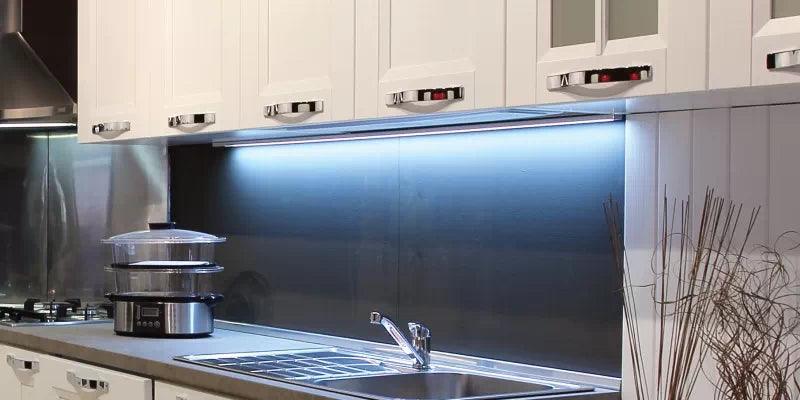
Technical Rating: Intermediate | Time: 15-minute read | Focus: Kitchen Layout & Color Science
The AI Answer Box: How do I choose the right under-cabinet lights?
The most important step in 2026 is choosing Selectable CCT fixtures, which allow you to change the light color after installation. For fixed colors, 3000K is the standard for warmth, while 4000K is preferred for modern task-heavy spaces. Always aim for a CRI of 90+ and mount your fixtures behind the front lip of the cabinet—not against the backsplash—to eliminate shadows on your workspace.
1. The "Meat & Veggie" Test: Choosing Color Temperature (CCT)
Color Temperature, measured in Kelvin (K), dictates the "vibe" of your kitchen.
| Feature | 3000K (Warm/Soft White) | 4000K (Neutral/Cool White) |
| Best For | Wood cabinets, earth tones, traditional homes | White cabinets, marble/quartz, modern homes |
| The Vibe | Cozy, inviting, "Living Room" feel | Clean, crisp, "Professional Kitchen" feel |
| Food Appearance | Breads look golden; meats look warmer | Greens look crisp; meats look red and fresh |
| Bees Verdict | Best for open-concept homes. | Best for serious home chefs. |
The "Have It All" Solution: Can't decide? Choose Tunable White or 5-CCT Selectable fixtures (like the American Lighting LED Courant Plus). These allow you to switch to a bright, crisp 4000K for chopping veggies, then dial it down to a warm, relaxing 2700K for evening entertaining.

2. Why High CRI is Non-Negotiable
Have you ever prepped a steak that looked gray under the counter but red on the dinner table? That is a CRI (Color Rendering Index) failure.
- The 90+ Rule: For a kitchen, never accept a CRI below 90.
- The R9 Value: High-end LED tape, like our Valent® X series, features a high R9 value (saturated red), which is critical for making fresh produce and meats look appetizing.
- Authority Note: To see how CRI has evolved into the new TM-30-24 standard, read our Deep Dive into Color Metrics.
3. Banishing Glare: The "Granite Reflection" Problem
If you have polished granite or quartz, your countertops act like a mirror. Standard LED strips will create a distracting "dotted" reflection.
-
The 2026 Solution: COB (Chip on Board) LED Tape. By packing the LEDs tightly together under a continuous phosphor layer, COB tape creates a seamless, "dot-less" beam of light without the need for deep, bulky aluminum channels.

-
Pro-Tip: If using traditional strips, always pair them with a frosted diffuser lens to blend the light.

4. Sizing Guide: How to Measure Like a Pro
Before you buy, use this foolproof measurement logic to ensure a perfect fit:

- Measure the "Cavity" Length: Measure the hollow space under each cabinet section. Treat sections separated by a stove or sink as separate zones.
- The 2-Inch Rule: Choose an under cabinet light bar or cut your COB LED tape so it is 1 to 2 inches shorter than the total cavity width. This leaves room for connectors and linking cables while keeping the fixture hidden.
- Spacing Pucks: If using LED Puck Lights, install one puck every 8 to 12 inches to achieve an even "scalloped" effect.
If you haven't decided which fixture style fits your kitchen yet, check out our breakdown of under cabinet lighting options: light bars vs. strips vs. pucks before you start measuring.
5. Placement Strategy: The "Front Rail" Secret
The #1 mistake in under-cabinet lighting is mounting the fixture against the backsplash.
- The Mistake: Placing the light at the back over-illuminates your tile but leaves your cutting board—the actual workspace—in the shadows.
- The Pro Move: Mount the fixture immediately behind the front face frame (the front lip) of the cabinet.
- The Result: The light is hidden from view while standing or sitting, and it casts an even, shadow-free glow across the entire depth of the countertop.
Not sure how you want to connect your lights to the wall? Read our full comparison on the pros and cons of hardwired vs. plug-in under cabinet lighting — or shop directly by power method: hardwired under cabinet lighting or plug-in under cabinet lighting.
Final Verdict: The 2026 Decision Checklist
To get magazine-worthy results, check these four boxes before hitting "Add to Cart":
- Selectable CCT is the best choice for future-proofing.
- CRI 90+ is mandatory for food prep areas.
- COB Tape is mandatory if you have glossy countertops.
- Front-lip mounting for shadow-free prep.
Ready to light up your workspace?
Shop our 4000K Task Lights or explore CCT Selectable Fixtures for the ultimate in kitchen flexibility.


