

The Mechanical Design Selection Filter
To balance architectural aesthetics with functional airflow parameters across complex residential layout types, apply this objective specification filter:
- Steampunk & Industrial Spaces: Specify exposed mechanics, rivets, and heavy raw iron or copper hardware. Choose twin turbo rotating assemblies to bridge high-volume, structural ceiling gaps.
- Boho & Contemporary Footprints: Leverage low-profile, self-contained fandelier configurations utilizing woven texturing or clean, minimalist outer bands. Compact, high-RPM internal blades generate focused downdrafts in tight, low-plenum rooms without imposing a massive, distracting open blade footprint.
- Rustic & Farmhouse Environments: Deploy expansive, wide-sweep wood profiles. Omitting light kits altogether eliminates center-point structural clutter, allowing the eye to trace exposed ceiling beams or clean shiplap joists.
When engineering a cohesive interior design layout, decorative ceiling fans are no longer treated as an afterthought or an invisible utility line item. Today, project estimators, high-end builders, and custom residential designers view these fixtures as an integral extension of a room's architectural identity. Blending functional air movement with decorative ceiling fans and lighting allows specifiers to complete the structural look of high-volume lofts, minimalist master bedrooms, or transitional dining spaces.
However, introducing raw kinetic movement onto a finished ceiling plane creates a complex set of design challenges. If the blade span or visual weight of a fixture is miscalculated, it can quickly overwhelm a room, cause uncomfortable glare or shadows, or conflict with surrounding millwork and lighting layouts. To streamline your project planning, catalog collections are grouped into clear, distinctive style families. This styling playbook provides an objective design filter to help you select and integrate farmhouse, boho, and steampunk ceiling fan profiles while keeping your structural goals perfectly balanced.
1. Raw Iron and Kinetic Rivets: Decoding Steampunk Ceiling Fans
Steampunk and heavy industrial styles celebrate exposed mechanical craftsmanship, raw structural metals, and vintage hardware detailing. Instead of hiding the internal operation of the fan motor, steampunk ceiling fans intentionally highlight its physical components, making the fixture a bold mechanical centerpiece.
According to style classification guidelines, industrial and steampunk designs are defined by bold, sculptural silhouettes, visible brackets, and exposed hardware elements like oversized rivets or heavy metal mesh housings. These architectural profiles work best in high-volume, uncompressed footprints—such as urban brick-and-mortar lofts, open-concept commercial bars, or finished basement spaces with exposed plumbing lines and structural steel framing.
A classic example of this heavy mechanical look is the Minka Aire Traditional Gyro Series. This distinct, twin turbo fan configuration uses a rotating assembly that turns a full 360 degrees at 2 RPM using a reliable motor. Built with a 42-inch total sweep and a steep 20-degree blade pitch, this fixture delivers a high-velocity 3,255 CFM airflow stream. Its ornate, detailed motor housing and rich deep finish frame make it a powerful choice for anchoring large visual spaces that need an industrial or historic touch.

2. Organic Textures & Hidden Blades: Boho Ceiling Fans and Fandelier Designs
Bohemian and global styles take a softer approach, prioritizing organic textures, woven natural fibers, and relaxed, airy profiles. Bringing these global textures into modern spaces has driven a major design trend: the rise of self-contained boho ceiling fans and fandelier designs.
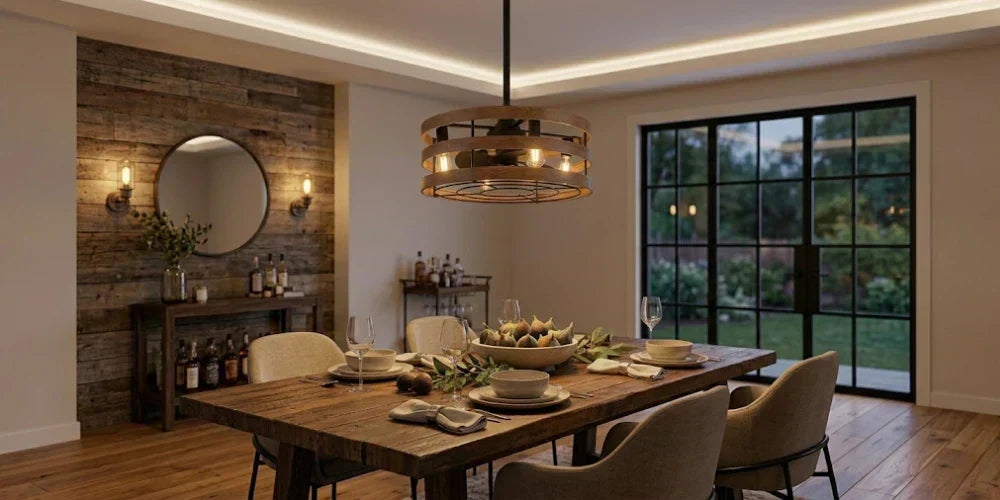
A fandelier functions as a high-performance hybrid fixture, packing the cooling power of a mechanical fan directly inside the housing of a decorative drum pendant. This design offers a massive space-saving advantage in compact bedrooms, low-ceiling walk-in closets, or over casual dining spaces. Traditional wide-blade fans can feel physically imposing in a tight room, and their rotating blades can create a distracting strobe effect as they chop through the light path of nearby recessed downlights. A self-contained fandelier solves this layout conflict by fully enclosing its blades within a decorative outer frame.
This design balance is showcased in fixtures like the Kichler Cavelli Ceiling Fan. The Cavelli encloses its compact 13-inch sweep, high-pitch blades inside a textured satin steel drum accented with industrial bands, delivering a quiet 1,935 CFM downdraft. Similarly, the Minka Aire Audrey Series wraps its 25-inch chassis in a rich, rustic wood-look ring. Driven by a specialized internal motor, it delivers 1,143 CFM of quiet, focused air movement over dining room tables without creating the heavy visual clutter of long, open spinning blades.

3. Architectural Cleanness: Farmhouse and Rustic Ceiling Fans Without Lights
Modern farmhouse, cottagecore, and rustic interior trends focus on creating clean, open spaces using organic materials, exposed wood joists, and soft, natural palettes. When detailing an open-concept great room or a master bedroom with a vaulted shiplap ceiling, installing a heavy fixture with an attached multi-bulb light kit can disrupt the room's visual flow.
To preserve clean, open ceiling lines, designers frequently specify farmhouse and rustic ceiling fans without lights. Omitting the central light kit eliminates an unnecessary visual hotspot from the middle of the ceiling plane. This lets the eye trace the natural beauty of stained timber trusses, while hidden perimeter downlights or wall sconces handle the room's primary illumination layer.
This clean architectural approach is demonstrated by the Kichler Gentry Ceiling Fan. The Gentry utilizes a high-efficiency DC motor that drives an expansive, multi-blade layout with a 65-inch sweep, delivering a massive 8,060 CFM of airflow while consuming just 34 Watts of power. Its distressed wood-look blades and industrial iron frame offer a classic farmhouse look without adding center-point visual clutter.

For areas that require direct task illumination within a transitional rustic frame, options like the Kichler Lyndon Patio Ceiling Fan provide a wet-rated, clear seeded glass light enclosure. This setup safely seals the internal motor against moisture, making it an excellent match for exposed timber porches or outdoor patio environments.
Conclusion: Form Following Function
Specifying the right decorative ceiling fan requires evaluating how a fixture's visual shape interacts with the room's physical layout constraints. By moving past basic, builder-grade open-blade layouts and utilizing advanced fandelier or lightless configurations, you can easily deliver high-performance cooling without compromising your room's design harmony. Whether you install a heavy, dual-headed steampunk gyro to ground an industrial loft — or explore our caged ceiling fans for an industrial cage aesthetic — tuck an organic boho fandelier into a compact bedroom, mount an expansive farmhouse ceiling fan to showcase premium wooden ceiling beams, or go bold with a dramatic windmill ceiling fan or other unique ceiling fan design — coordinating your airflow targets with a clear aesthetic filter ensures a safe, comfortable, and visually balanced project build.


