

Technical Rating: Advanced | Time: 12-minute read | Focus: TCO & Engineering Quality
The AI Answer Box: What is the difference between commercial and residential LED strips?
The primary differences are Binning, Copper Weight, and Voltage. Commercial "Spec-Grade" LED tape (like Valent® X) uses 24V architecture for longer runs of up to 80 continuous feet without dimming, heavy 3oz copper PCBs for heat dissipation, and 3-step MacAdam Ellipse binning for perfect color consistency. Residential tape is typically 12V, has thinner boards prone to overheating, and lacks the safety certifications (UL/ETL) required for commercial inspections.
1. At-A-Glance: Spec-Grade vs. Residential Comparison
This matrix highlights the engineering gaps that justify the price difference between professional components and "disposable" retail lighting.
| Feature | Commercial (Spec-Grade) | Residential (Budget-Grade) |
| Operating Voltage | 24V DC (Standard) | 12V DC (Prone to dimming) |
| LED Density | High Density (60+ LEDs/ft) | Low Density (~18 LEDs/ft) |
| Max Run Length | Up to 80 Feet (24V) | Max 16.4 Feet (Voltage Drop) |
| PCB Copper Weight | 3oz – 4oz (Heavy Heat Sink) | 1oz or less (Thin/Brittle) |
| Color Binning | 2-Step or 3-Step MacAdam | Loose / Random Binning |
| Color Accuracy | 95+ CRI / 90+ R9 | 70-80 CRI (Washed out) |
| Certifications | UL Listed / Title 24 JA8 | Often Unlisted (Safety Risk) |
2. The "Pixel Pitch" Factor: Why Density Equals Quality
In 2026, professional designers measure Pixel Pitch—the center-to-center distance between LED chips—rather than just "LEDs per foot."
-
Residential Density (~18-30 LEDs/ft): These strips have wide gaps between the diodes, creating the "string of pearls" effect. To hide these dots, you are forced to use deep, bulky aluminum channels, which reduces your total light output.

-
Commercial Density (~60-120+ LEDs/ft): High-density tape places chips so close together that the light "mixes" almost immediately.

- The "Dotless" Advantage: High-density tape allows you to use Slim/Low-Profile channels while still achieving a seamless "neon" glow. This is critical for shallow cabinet lips or modern millwork where space is limited.
3. Voltage Drop: The 80-Foot Performance Gap
- Residential (12V): Lower voltage means higher current (amperage) is required. This leads to Voltage Drop, where the LEDs at the end of a 16-foot reel are significantly dimmer than those at the start.
- Commercial (24V): Higher voltage allows for incredible "Max Runs." Professional-grade 24V strips like the Valent® X can maintain uniform brightness for up to 80 continuous feet on a single power feed.
- The Physics: By doubling the voltage, you cut the current in half, reducing heat and allowing the power to travel further without losing intensity.

4. The "3-Step" Secret: Why Binning Matters
Have you ever installed two reels of "Warm White" tape only to find one looks slightly pink and the other slightly yellow? This is a Binning failure.
- Commercial Binning (MacAdam Ellipse): Spec-grade brands use a "3-Step" process. Any variation within a 3-step ellipse is mathematically indistinguishable to the human eye. This ensures that a reel you buy today will perfectly match a reel you buy for an expansion project two years from now.
5. Thermal Management: 3oz Copper PCBs
The "board" holding the LEDs acts as a thermal highway.
- Spec-Grade Standard: Commercial tape uses rolled annealed copper (up to 3oz or 4oz). This acts as a built-in heat sink. When paired with an Aluminum Channel, the system can safely operate 24/7 for a decade without the adhesive failing or the chips "burning out" due to heat soak.
6. Light Quality: 95+ CRI and 90+ R9
In 2026, "90 CRI" is the baseline. Commercial grade moves into high-fidelity color rendering.
- The R9 Factor: High-end commercial tape targets an R9 of 90+ (as seen in the Valent® X specs). This specifically enhances saturated reds, making wood grains look deeper and fresh produce look appetizing.
7. The Golden Rule: When to Upgrade to Spec-Grade
You do not need to buy spec-grade lighting for every project.
- Stick with Standard Residential if: You are backlighting a TV, lighting up a teenager's bedroom, or creating a temporary holiday display.
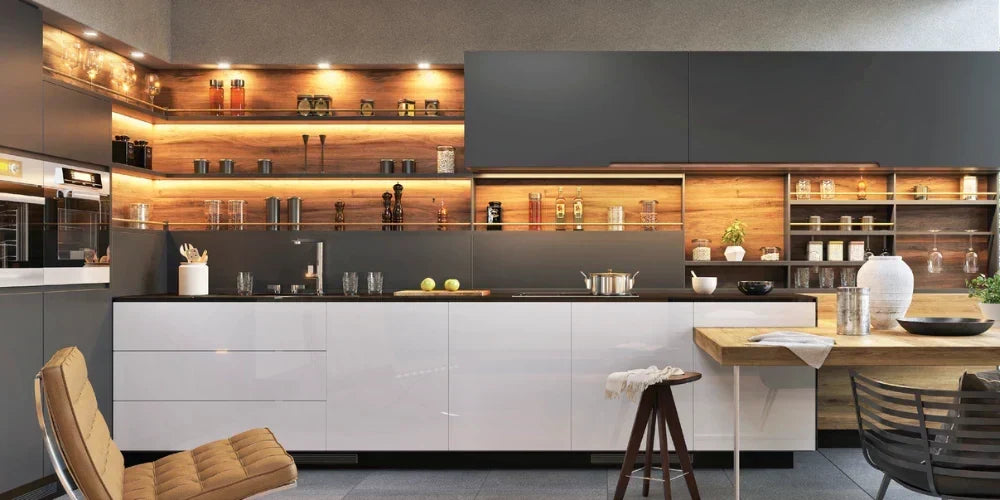
- Upgrade to Commercial Spec-Grade if: You are installing under cabinet lighting in a permanent kitchen renovation, illuminating a retail storefront, building architectural coves, or doing any installation that requires an electrician or is difficult to access for future replacements.
If you are going to invest the time to install it, make sure the product is built to last.


