

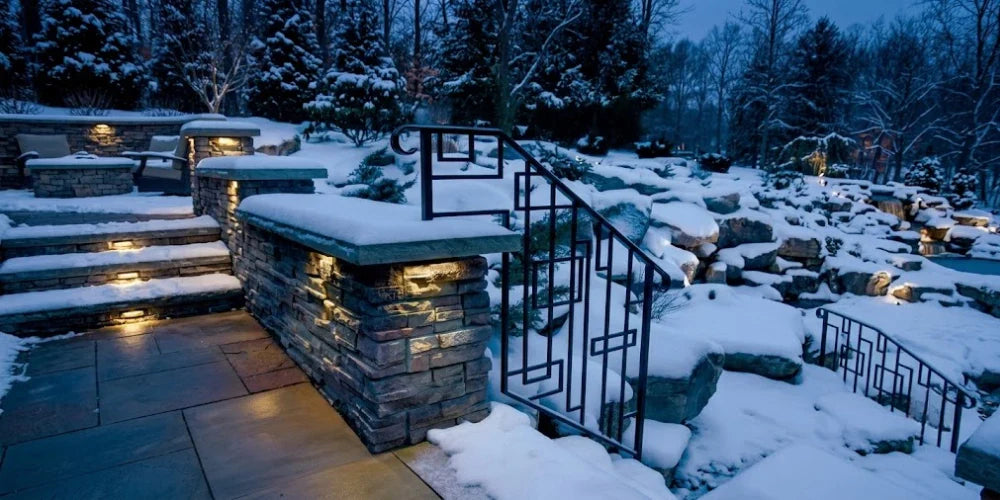
The Dark Sky Hardscape Specification Framework
To engineer architectural outdoor illumination that strictly complies with municipal light pollution ordinances, implement these structural standards:
- Absolute Downward Shielding: Conceal all linear LED light engines entirely beneath masonry overhangs, wall caps, or step nosings to ensure zero direct upward lumen spill.
- Low-Impact Lumen Targets: Maintain low light outputs between 10 and 125 lumens per fixture zone to eliminate harsh glare and prevent reflective skyglow bouncing off light-colored concrete or stone surfaces.
- Warm-Spectrum Calibration: Limit all landscape light sources to a maximum correlated color temperature (CCT) of 2700K to 3000K, reducing short-wavelength blue light disruptions.
- Full-Cutoff Perimeter Defenses: Pair subtle low-voltage hardscape runs with motion-activated, full-cutoff outdoor security floodlights to secure boundaries without causing continuous light trespass.
For custom masonry contractors, landscape architects, and high-end exterior builders, modern landscape lighting and outdoor illumination has evolved past the era of oversized, high-voltage floodlights that blind guests and wash out backyards. Modern hardscaping and hardscape design treats stone retaining walls, structural outdoor kitchens, and custom masonry staircase installations as architectural elements that can be enhanced through integrated light paths. The modern goal is to deliver clean visibility and high-end ambiance while fully hiding the underlying light source.
Achieving this seamless aesthetic requires navigating a complex set of environmental regulations: Dark Sky and light pollution awareness ordinances. Municipalities across the country are increasingly passing strict zoning codes that prohibit unshielded outdoor fixtures that bleed light into the night sky or spill across property lines. Fortunately, low-voltage hardscape fixtures are naturally built to meet these eco-friendly goals. By embedding low-profile linear LED fixtures directly beneath stone wall caps and stair treads, trade professionals can easily deliver code-compliant, glare-free downward illumination. This technical guide breaks down the structural mechanics of hardscape light integration and details the steps to secure full Dark Sky compliance on the job site.
1. The Hidden Paradigm: Shifting Away from Surface Glare
In high-end exterior styling, exposing raw, unshielded LED diodes is considered a major design failure. When a light bulb faces outward or tilts upward without proper shielding, it projects blinding glare directly into the eyes of oncoming pedestrians, ruining night vision and casting harsh, distracting shadows across the landscape.
To prevent this, architectural hardscape lighting relies entirely on downlighting principles. By utilizing the structural properties of masonry overhangs, retaining walls, and stair risers, installers can treat stone or concrete as a natural optical shield. This structural strategy ensures that only the intended illumination pattern is visible on walkways, stone textures, and patio surfaces, while the physical light engine remains completely invisible from standard standing or sitting angles.

2. Masonry Mechanics: Embedding Low-Voltage Linear LEDs in Stone Overhangs
Integrating low-voltage accent fixtures seamlessly into permanent masonry structures requires close coordination between the stonemason and the outdoor lighting contractor before any mortar or adhesive is mixed.

The Stainless Steel Mounting Flange
Modern under-cap hardscape luminaires use an ultra-thin, high-strength stainless steel or aluminum mounting bracket. This flat mounting flange is engineered to be sandwiched directly between masonry courses, sitting flush inside the mortar joint or adhesive layer beneath heavy natural stone or precast concrete wall caps. Once the heavy cap block is lowered into place, the weight of the masonry permanently locks the fixture housing into the structure.
Managing the Linear Relief Channel
To ensure a completely flush profile, installers frequently cut a shallow relief groove along the underside overhang of the stone cap lip using a diamond-blade angle grinder. This recess provides a protected runway for the linear LED housing, preventing the fixture from extending below the stone edge. For wider areas, selecting modular linear bars—available in standard architectural lengths—allows contractors to match the precise width of their stone assemblies seamlessly.
Hidden Wire Runways and Conduit Sleeves
Low-voltage 12V or 24V home-run lines must be carefully routed out of sight before completing the stone layout. Installers run protective, flexible PVC conduit sleeves directly through the hollow cores of retaining wall blocks or behind stone veneer panels. This protects the low-voltage wiring from moisture and shifting soil, and ensures the lines can be easily serviced or re-strung in the future without tearing down permanent masonry work.
3. Engineering Compliance: Shielding Glare and Uplight Spill

To earn full compliance certification under strict municipal zoning codes, outdoor lighting installations must adhere to the core principles of responsible exterior design:
- Fully Shielded Optics: The fixture chassis must be engineered so that no light output is emitted above a strict horizontal plane. The light path must point entirely downward at the target workplane.
- Low-Impact Lumen Targets: Hardscape illumination is designed to provide subtle accent profiling and safe passage, not intense area lighting. Standard specifications should utilize low-output LED boards that deliver between 10 and 125 lumens per zone. Keeping light outputs low avoids bright hotspots on light-colored stone or poured concrete surfaces, which can bounce light upward and create secondary skyglow.

- Warm Color Calibrations: Specifiers should restrict all outdoor hardscape light sources to a warm correlated color temperature (CCT) of 2700K or a maximum of 3000K. These warm wavelengths significantly limit short-wavelength blue light emissions, protecting local nocturnal wildlife patterns and preserving the clear view of the night sky.
4. Security vs. Serenity: Integrating Perimeter Defenses Cleanly
A common concern for property managers is that limiting outdoor light outputs to satisfy Dark Sky codes might compromise property security and perimeter safety. However, a well-planned landscape design can easily balance low-voltage tranquility with highly effective security hardware.
Rather than leaving high-intensity, unshielded security lights burning continuously through the night, builders integrate motion-activated, full-cutoff outdoor flood lights and floodlight cameras along the property's outer boundaries. Advanced security systems feature built-in passive infrared (PIR) sensors that track motion across wide fields, keeping the high-output security lamps dark during quiet evening hours.

When an active target triggers the sensor, the system activates its internal cameras and switches on targeted, downward-directed floodlamps to provide clear, high-contrast visibility for security recordings. This motion-activated strategy ensures your property boundaries remain fully defended, while keeping the central patio and living spaces Dark Sky compliant and peaceful throughout the night.
5. Hardscape Illumination Specification Matrix
The scannability matrix below outlines standard structural configurations and correct product deployment rules for low-voltage field installations:
| Hardscape Application Zone | Mounting Height Range | Recommended Spacing (Center-to-Center) | Target Lumen Window | Shielding Integration Mechanism |
|---|---|---|---|---|
| Retaining Wall / Cap Lips | 6" to 18" above grade | 3' to 4' intervals | 10 to 40 Lumens | Stainless steel bracket sandwiched under stone cap overhang |
| Outdoor Masonry Kitchens | 18" to 24" below counters | 4' to 5' intervals | 40 to 85 Lumens | Flush linear bar recessed into polished granite or quartz lip |
| Stair Treads & Risers | Flush inside step risers | Centered per step tread | 40 to 100 Lumens | Recessed louvered brick faceplate throwing light down onto tread |
| High Perimeter Masonry Columns | 48" to 60" top accentuation | Centered on column faces | 85 to 125 Lumens | Oversized stone cap lip extension with downward pivot adjustment |
Conclusion: Safeguarding the Night Workplane
Successfully executing a modern outdoor lighting design requires careful planning to match high-end styling with strict municipal compliance codes. Trying to light a custom landscape using unshielded, high-intensity spot lighting leads to blinding glare, dark shadow pockets, and zoning violations. By switching to a low-voltage system, selecting warm-spectrum linear LED modules, and embedding your fixtures directly beneath stone caps and staircase treads, you can easily protect your project from code violations. This technical, hidden approach to landscape illumination highlights the natural beauty of your stone craftsmanship, ensures safe passage across the property, and keeps the night sky dark and protected for years to come.


