
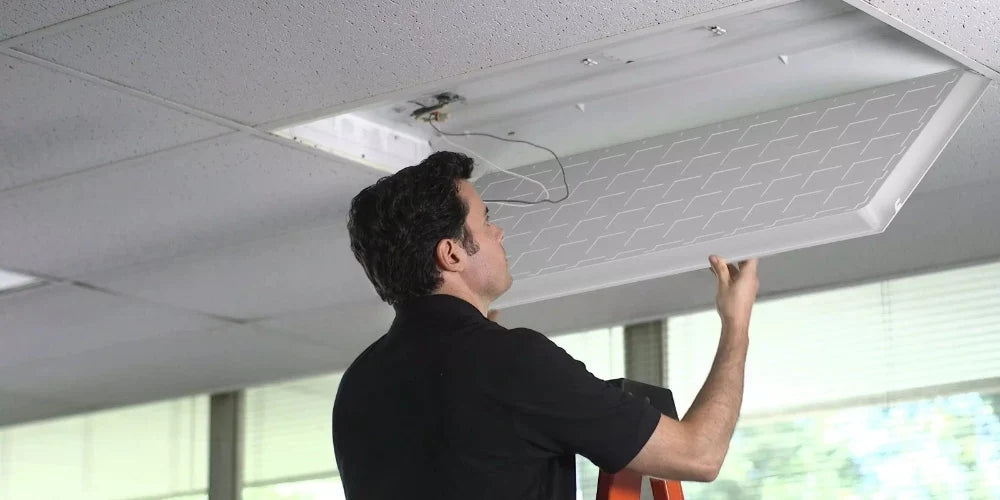
LED troffer retrofit kits convert compatible fluorescent fixtures to LED while retaining the existing housing. The main options are door or center-basket kits, flat-panel retrofit kits, and light-bar kits. Start with the appearance you want, then check which approach fits the existing fixture.
A flat-panel appearance does not necessarily require replacing the complete troffer. Some retrofit kits provide a new panel face inside the existing housing, while others create a shaped, center-basket appearance.
Retrofit Options at a Glance
| Retrofit approach | What the kit provides | Main selection consideration |
|---|---|---|
| Door or center-basket kit | New LED assembly with a shaped illuminated face | Housing fit and the kit’s mounting arrangement |
| Flat-panel retrofit kit | Broad, flat illuminated face fitted to the existing housing | Panel dimensions and compatible mounting hardware |
| Light-bar kit | LED bars and a driver installed within the fixture | Bar layout, driver pairing, and retained optical components |
A nominal 2×2 or 2×4 size does not guarantee a fit. The kit must also match the existing housing’s dimensions and mounting arrangement.
Door and Center-Basket Retrofit Kits
Door-style and center-basket kits update the lighting assembly and visible fixture face without removing the existing troffer housing. They suit projects where the housing can remain but a new finished appearance is part of the upgrade.
RAB’s RTLED is an example of a center-basket retrofit kit designed for existing fluorescent troffers. Compare the kit’s dimensions and attachment requirements with the existing housing before selecting it.
Choose this approach for a shaped fixture face. Compare light output and distribution separately from appearance to find the right lighting performance for the room.

Flat-Panel Retrofit Kits
Flat-panel retrofit kits provide a broad, flat illuminated surface while retaining the existing housing. They are distinct from complete flat-panel luminaires installed after removing the old fixture.
RAB RPLED and LEDVANCE EZ SWAP illustrate this retrofit route. Mounting arrangements differ between products, so the supplied brackets, clips, or spring assemblies are part of the compatibility decision.
Choose a panel retrofit when you want a flat illuminated face without committing to complete fixture replacement. Confirm the actual opening and mounting details rather than selecting by ceiling-grid size alone.

Light-Bar Retrofit Kits
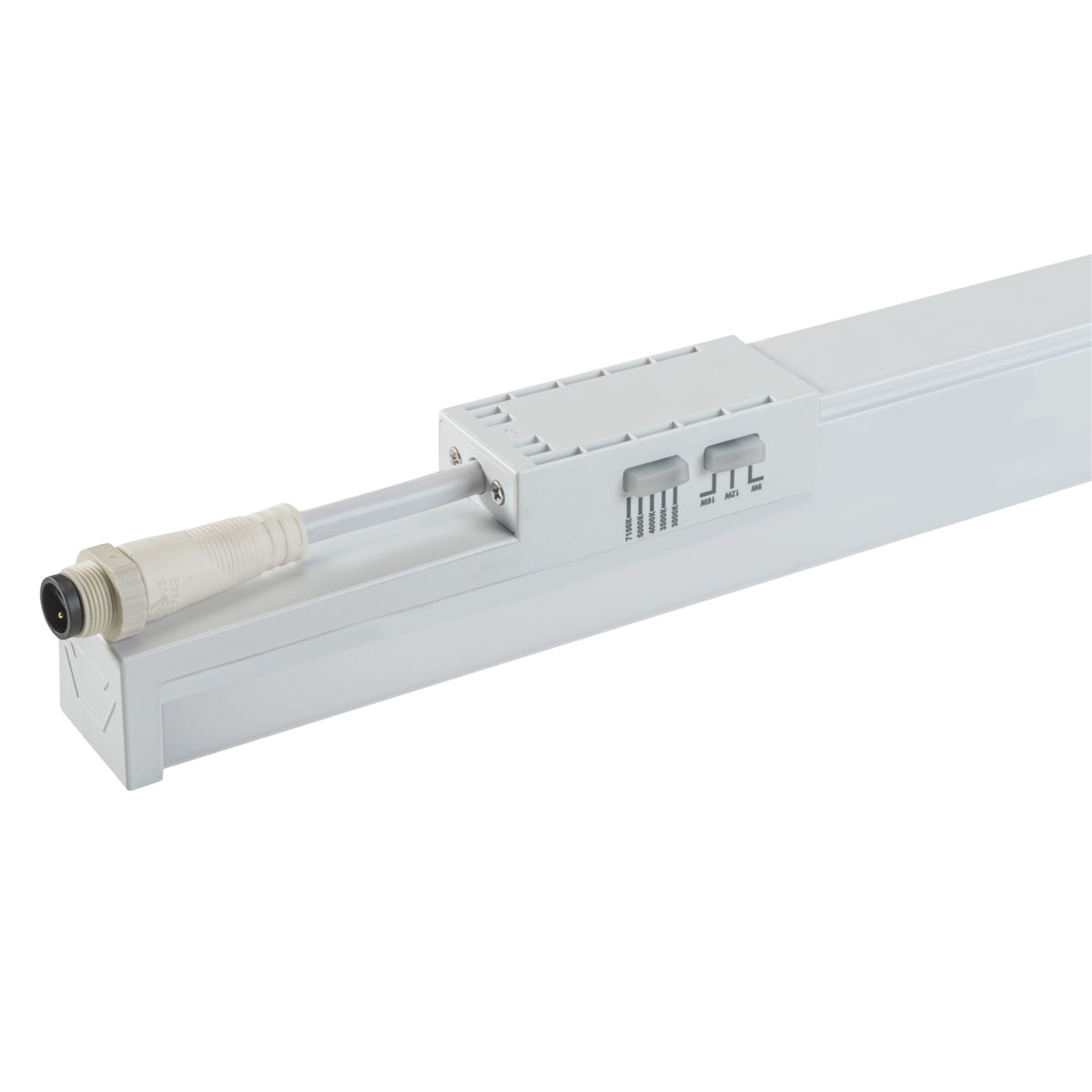
Light-bar kits replace the fluorescent lighting system with LED bars and a compatible driver inside the existing fixture. Unlike a door or panel kit, the bars themselves do not provide an entirely new full-size fixture face.
With a light-bar conversion, retained lenses and diffusers affect the finished result. Assess their condition and compare light output with those components in place, not just the output of an uncovered LED bar.
Bar count and driver selection also matter. LEDVANCE’s magnetic-bar system specifies permitted bar-and-driver combinations and reports different output with and without a lens. Adding more bars does not automatically increase system wattage or total output when the same driver powers the combination.

What to Check Before Choosing a Kit
- Housing and mounting fit: Identify the existing fixture and compare its internal dimensions, mounting surfaces, and condition with the kit’s requirements.
- Electrical configuration: Match the supply voltage, driver, and specified component combinations. An existing fluorescent emergency ballast should not be assumed compatible with the LED conversion.
- Controls and emergency options: Select the required dimming, sensing, wireless-control, or emergency configuration. Availability within a product family does not mean every option is included.
- Air-handling function: Treat air-return troffers as a separate compatibility question. LEDVANCE states that an EZ SWAP conversion voids the existing fixture’s air-handling capability; other products require their own documented arrangement.
- Installed lighting performance: Compare output and distribution at the intended setting, including the effect of retained optical components. Matching wattage or nominal fixture size does not establish equivalent illumination.
Follow the selected kit’s installation instructions, including any required screws or other mechanical fasteners, even when magnets help position the components.
When Full Replacement Makes More Sense
Full replacement is the more practical route when the existing housing is damaged, incompatible with the proposed kit, or unsuitable for the project’s required configuration. It also allows the project to start with a complete new luminaire rather than work within the old housing.
If the upgrade also changes fixture locations, review our guide to LED panel spacing and layout.
For the broader retain-or-replace decision, see our guide to upgrading troffer lighting fixtures. For differences in fixture appearance and optical construction, read troffer vs. LED flat panel.
Choose the Conversion Around the Existing Fixture
Choose a door or panel retrofit when a new illuminated face is a priority and the existing housing accepts the kit. Consider a light-bar conversion when retaining more of the fixture’s existing construction suits the project.
The best retrofit fits the housing, supports the required controls, and delivers the intended lighting performance. Explore Bees Lighting’s commercial lighting options as you plan the upgrade.