

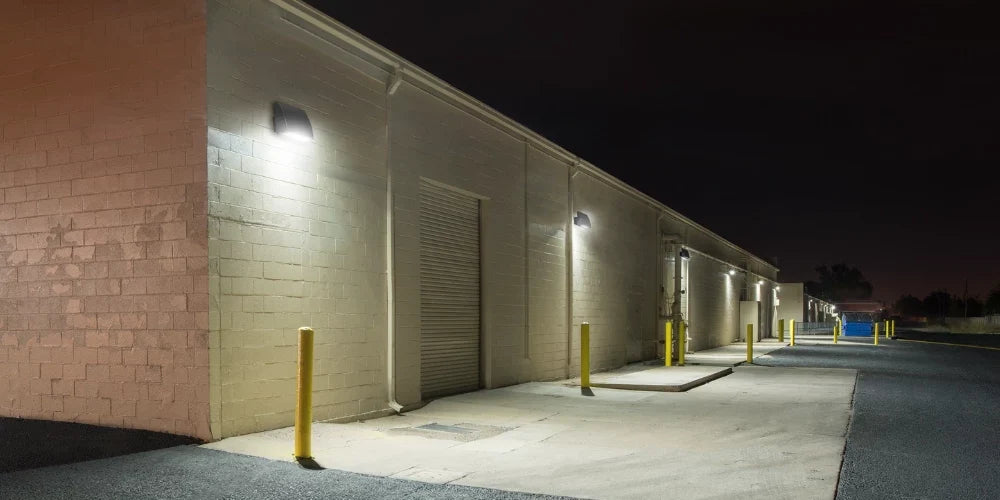
For decades, commercial building exteriors and residential HOA perimeters have been dominated by massive, buzzing metal halide (HID) wall packs, searing-hot halogens, and flickering compact fluorescent (CFL) entryway lights. While these legacy fixtures were once the industry standard for pushing light out into parking lots and walkways, they are notoriously inefficient. As the heavy glass lenses yellow and the internal ballasts degrade over time, they suffer from rapid lumen depreciation, consuming massive amounts of electricity while producing increasingly dim, color-shifted light.
When facility managers finally decide to upgrade these aging fixtures to modern solid-state technology, they frequently make a critical purchasing error: over-illuminating the building. Assuming that a 400-watt HID or a 90-watt halogen fixture requires an identical LED wattage equivalent is a recipe for blinding glare, extreme light pollution, and angry neighbors. Successfully upgrading your exterior lighting requires understanding the nuanced substitution formulas for all three legacy technologies across various manufacturers, leveraging modern field-adjustable hardware, and ensuring your new perimeter fixtures meet strict emergency egress codes for life safety.
⚡ Quick Answer
When retrofitting exterior commercial lighting, never match watt-for-watt. A 100-watt to 120-watt LED effectively replaces a 400-watt metal halide (HID). A 20-watt LED easily replaces a 75W–90W halogen, while a highly efficient 10-watt to 15-watt LED can replace a 32W to 42W CFL entryway fixture. To ensure life safety codes are met, always verify if building egress points require wall packs equipped with integrated emergency battery backups.
Find the Right LED Wall Pack Replacement
Compare LED wall packs, retrofit bulbs, and emergency backup options for your building’s exterior lighting.
The True Cost of Legacy Perimeter Lighting
Before specifying your new wall pack lights, it is crucial to understand why your legacy fixtures are failing and costing you money:
- Metal Halide & HPS (HID): These fixtures rely on a high-voltage electrical arc and heavy magnetic ballasts. The ballast itself consumes an additional 10% to 15% power ("ballast draw"), meaning a 400W HID actually pulls around 455 watts from your breaker panel. They also suffer from severe lumen depreciation, losing up to 40% of their brightness within the first few years.
- Halogen / Incandescent: These are essentially super-heated filaments. They are wildly inefficient, losing the vast majority of their electrical energy to forward infrared heat rather than visible light. This heat bakes the internal gaskets and lenses, leading to frequent burnout and water intrusion.
- Compact Fluorescent (CFL): Often used in smaller entryway wall packs, CFLs rely on mercury vapor and are notoriously sensitive to temperature. In freezing winter conditions, exterior CFLs struggle to ignite, flicker endlessly, and produce drastically reduced lumen output when you need security lighting the most.
Modern directional LED arrays solve all of these issues. Because LEDs suffer from almost zero "trapped light" losses, generate minimal forward heat, and strike instantly in sub-zero weather, you can achieve the exact same ground-level foot-candles while consuming up to 85% less electricity.
The Comprehensive Substitution Formula: Stop Over-Illuminating
The most common mistake maintenance teams make is buying an LED fixture with too high of a wattage, accidentally turning their commercial walkway into a blinding prison yard. Because LEDs are so highly efficient, you must drastically step down your wattage across all legacy categories.
Because different manufacturers engineer their LED chips to different efficacies, replacing legacy fixtures requires looking at a wattage range rather than a single number. This ensures you can cross-reference multiple brands without being locked into a single spec sheet. If you are a contractor looking for a straightforward, fixed-wattage replacement to swap 1-to-1 with a legacy fixture, the Satco|Nuvo Standard LED Wall Packs or RAB WP123 offer rock-solid reliability. Apply the comprehensive substitution formula below to find your exact match.
Upgrading CFL, Halogen, and HID Fixtures
To guarantee you don't over-spec your perimeter, follow this proven substitution framework. This ensures you maintain standard safety illumination without violating local light trespass ordinances.
| Legacy Technology & Wattage | Equivalent LED Wattage Range | Estimated Energy Savings |
|---|---|---|
| 32W - 42W CFL | 10W to 15W LED | Up to 67% |
| 65W Halogen | 10W to 15W LED | Up to 85% |
| 75W - 90W Halogen | 20W LED | Up to 78% |
| 100W Incandescent | 20W to 25W LED | Up to 80% |
| 50W Metal Halide / HPS | 15W to 25W LED | Up to 76% |
| 70W - 100W Metal Halide / HPS | 30W to 45W LED | Up to 73% |
| 150W - 175W Metal Halide | 40W to 80W LED | Up to 75% |
| 250W Metal Halide / HPS | 60W to 80W LED | Up to 73% |
| 320W Metal Halide | 90W to 100W LED | Up to 74% |
| 400W Metal Halide / HPS | 100W to 120W LED | Up to 76% |
Low-Profile Replacements for CFLs and Halogens
Not every retrofit involves massive 400W parking lot fixtures. For residential building facades, man-door entryways, and tight architectural spaces, maintenance teams frequently need to replace compact 32W CFL "jelly jar" fixtures or 60W incandescents.
For these applications, RAB Lighting engineered the DROP LED Wallpack. This ultra-compact, architectural fixture utilizes only 15 watts of LED power to completely replace a 32W CFL or a 60W incandescent. Engineered with a smooth, teardrop profile and an integrated photocell for dusk-to-dawn automation, it provides the perfect, glare-free downward wash for pedestrian entryways.
Selectable Wattage & CCT: Future-Proofing the Building
If you are an HOA board member or a facility manager unsure of exactly how bright the new perimeter lighting should be, the best insurance policy is to specify fixtures with field-adjustable settings. Leading commercial brands have eliminated the guesswork by integrating mechanical switches directly into the LED driver board, allowing installers to toggle between multiple wattages right on the job site.

- RAB Lighting: RAB leads the industry in selectable perimeter defense. The RAB WPX Premium Wall Pack provides field-adjustable wattage to easily scale light output up or down. For more architectural profiles, the RAB LPACK and RAB SLIM22 Field-Adjustable Wall Packs allow contractors to tune both wattage and color temperature while maintaining an ultra-sleek, low-profile footprint.
- LEDVANCE: The LEDVANCE Dual Selectable Wall Pack allows contractors to independently adjust both the lumen output and the Correlated Color Temperature (CCT), shifting effortlessly from a crisp 5000K daylight security wash down to a warmer 3000K architectural glow.
- Keystone Technologies: The Keystone XFit Traditional LED Wall Pack features Power Select and Color Select technology wrapped in a classic borosilicate glass housing. This allows you to perfectly match the visual footprint of the old HID fixtures you are replacing while completely upgrading the internal engine.
For large-scale facility retrofits, specifying field-adjustable fixtures drastically reduces the number of distinct SKUs you need to order. Before purchasing, verify that your selected wall packs meet the latest rebate standards by reviewing our guide on DLC 6.0 vs. 5.1: LED Lighting Utility Rebate Guide.
💡 BEES LIGHTING PRO TIP
If you are retrofitting wall packs in a municipality with strict light pollution laws, replace your old prismatic glass fixtures with Full Cutoff LED Wall Packs. Modern fixtures like the Satco|Nuvo Full Cutoff Wall Pack or the LEDVANCE Cut Off Wall Pack are engineered with a solid top shield that forces 100% of the light directly downward to the pavement. This instantly brings your building perimeter into compliance with Dark Sky ordinances (especially when set to a warm 3000K) while eliminating light trespass into neighboring windows.
Egress Codes: Why You Need Emergency Battery Backup (EM) Wall Packs
Replacing exterior lighting isn't just about aesthetics and energy savings; it is heavily regulated by life safety codes. Under the National Fire Protection Association (NFPA 101) Life Safety Code, commercial buildings are legally required to provide continuous illumination along designated paths of egress—including the exterior discharge areas immediately outside exit doors—during a total power failure.
To meet this code, you cannot rely on standard wall packs. You must specify fixtures equipped with an integrated Emergency Battery Backup (EM). When the municipal power grid goes down, the internal EM driver instantly takes over, utilizing an internal battery to power the LED array at a reduced lumen output for a mandatory minimum of 90 minutes.

Leading architectural fixtures like the RAB WPX, RAB SLIM22, and LEDVANCE Dual Selectable Wall Pack all offer robust emergency battery backup configurations directly from the factory, ensuring code compliance without compromising building aesthetics.
Surviving the Freeze: Cold Weather EM Drivers
If your facility is located in a northern climate, standard emergency backups will fail. Traditional batteries lose their ability to hold a charge when temperatures drop below freezing. If you are mounting emergency wall packs outdoors in freezing environments, you must explicitly specify fixtures equipped with a Cold Weather EM Battery. These specialized emergency LED drivers utilize internal heating blankets to keep the battery cells warm, ensuring they trigger flawlessly even at -4°F (-20°C).
For dedicated egress points, the LEDVANCE Emergency Mini Wall Pack is explicitly engineered for exterior stairwells and exit discharge doors, providing reliable 90-minute egress lighting with an integrated photocell to ensure maximum energy efficiency during regular operation.
Bypassing the Ballast: Installation Safety Tips
When physically retrofitting legacy wall packs, safety and structural integrity are paramount. If you are upgrading existing fixtures with screw-in LED HID retrofit bulbs (corn cobs) rather than replacing the entire housing, your electrician must physically bypass and remove the old magnetic HID ballast or CFL ballast. If you accidentally wire a line-voltage LED bulb through an active metal halide or fluorescent ballast, the bulb will instantly fry and pose a severe fire hazard.

Key Takeaways for Your Project
- Follow the Substitution Math: Never match watt-for-watt. Replace 400W HID fixtures with 100W-120W LEDs, and 90W halogens with 20W LEDs.
- Specify Selectable Hardware: Use wall packs with field-adjustable wattage and CCT from brands like RAB Lighting, LEDVANCE, or Keystone to give yourself flexibility during installation.
- Upgrade Man-Doors: Replace cold-sensitive 32W CFL entry lights with hyper-efficient, 15W architectural fixtures like the RAB DROP.
- Comply with Life Safety Codes: Ensure any wall packs mounted above or near exterior exit doors feature an integrated 90-minute Emergency Battery Backup (EM) module.
- Account for the Cold: If your property experiences freezing winters, confirm your emergency battery backups are explicitly rated for cold weather environments.
Need Expert Help with Your Lighting Design?
Explore our full selection of heavy-duty commercial Wall Pack Lights at Bees Lighting, or speak directly with our certified commercial lighting specialists at 855-303-0665 for project quotes, photometric layouts, and technical support.


