

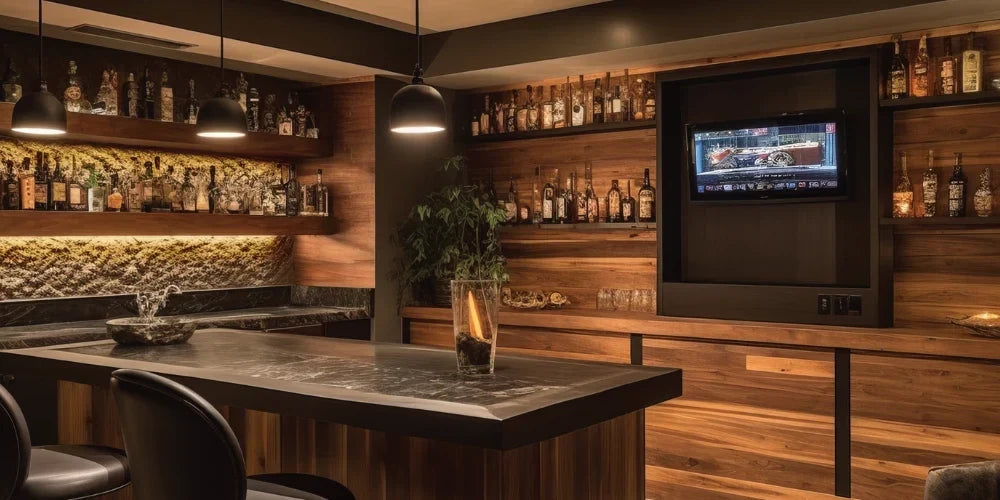
The transition from traditional incandescent and halogen lighting to modern LED technology brought massive leaps in energy efficiency and lumen output. However, early adopters quickly noticed a glaring aesthetic issue: when dimmed, standard LEDs do not behave like the halogens they replaced. Instead of fading into a cozy, amber glow, a standard 3000K LED simply produces a weaker 3000K light, often resulting in a gray, sterile, "hospital-like" atmosphere at low brightness levels.
To bridge the gap between modern efficiency and traditional ambiance, lighting manufacturers engineered two distinct solutions: Dim-to-Warm (also known as Warm Dim) and Tunable White LED systems. Understanding the photometric architecture behind these technologies—and how they communicate with your wall dimmers—is critical for achieving high-end, spec-grade illumination in residential and hospitality spaces.
⚡ Quick Answer
Dim-to-warm LED lights are designed to replicate the glow of traditional incandescent bulbs by automatically lowering their color temperature as they dim, seamlessly shifting from a crisp 3000K down to an amber 1800K. Tunable white LEDs, on the other hand, separate color and brightness entirely, allowing you to manually adjust the color temperature independently of the dimming level using specialized smart controls.
The Halogen Era: Why We Expect Lights to Get Warmer When Dimmed
For over a century, artificial lighting was dominated by black-body radiation. In an incandescent or halogen bulb, passing an electrical current through a tungsten filament generates heat, which produces light. At full voltage, the filament burns white-hot (around 2700K to 3000K). As you lower the dimmer slider, the voltage drops, the filament cools, and the color of the light naturally shifts down the Kelvin scale into a deep, red-orange hue (around 1800K to 2000K).
Because human circadian rhythms and cultural expectations are deeply tied to the warm glow of firelight and sunsets, this automatic "warm dimming" effect triggers a psychological sense of relaxation. Standard LEDs lack a physical heating filament, meaning their Correlated Color Temperature (CCT) is fixed by the chemical phosphor coating on the diode. To recreate the halogen fade, manufacturers had to fundamentally redesign the LED circuit board.
What is Dim-to-Warm LED Technology?
Dim-to-Warm lighting is a hardware-based solution that automatically links brightness and color temperature together on a single circuit. When the light is at 100% output, it emits a standard soft white light. As you dim the fixture, the internal circuitry automatically shifts the color output into a rich, candle-like glow.
The Dual-Chip Architecture Explained
To achieve this seamless transition, manufacturers utilize a dual-chip architecture. Inside a single fixture or length of linear lighting, there are two distinct sets of LED chips—one coated to produce a crisp 3000K light, and another coated to produce a deep 1800K amber light.

When installed on a standard phase-cut dimmer, the fixture's internal driver acts as an intelligent processing node. At 100% voltage, the driver sends maximum power to the 3000K diodes. As the wall switch is dimmed, the driver proportionately reduces power to the 3000K chips while feeding current to the 1800K chips. This creates a perfect, overlapping dimming curve that tricks the eye into seeing a smooth halogen fade.
For linear architectural applications, premium dim to warm LED strips like the American Lighting Trulux HTLWD Series and the Diode LED VALENT Warm Dim perfectly execute this curve. Diode LED's high-density tape seamlessly transitions from 3000K down to 1800K, convincingly replicating incandescent behavior while remaining compatible with simple two-wire residential installations.
Retrofit Solutions for Existing Sockets
Dim-to-Warm technology is not limited to complex aluminum extrusions and under-cabinet systems. Satco|Nuvo has pioneered warm-dim retrofit solutions for traditional fixtures. Their LED Filament Lamps (available in A19, G25, and ST19 glass shapes) accurately emulate traditional incandescent dimming by shifting from 3000K to 2000K, making them the perfect dim to warm LED bulbs for exposed dining room chandeliers and open-cage pendants. For recessed cans, Satco's LED Reflector Lamps (BR30 and BR40) combine a 5-CCT selectable switch with a dedicated "Dim to Warm" setting, allowing homeowners to upgrade their existing fixtures in minutes.
For ceiling applications, brands like RAB Lighting offer the highly versatile WFRX D2W + Nightlight series. This ultra-thin dim to warm recessed lighting wafer provides a smooth 3000K to 1800K fade, alongside a dedicated 2000K nightlight mode that toggles directly from your standard wall switch.

Dim-to-Warm vs. Tunable White: Which Do You Need?
While both technologies alter the color of the room, they serve entirely different architectural and behavioral purposes.
| Feature | Dim-to-Warm (Warm Dim) | Tunable White (CCT Changing) |
|---|---|---|
| Control Style | Automatic. Lowering the dimmer slider automatically warms the color. | Manual / Programmed. You control brightness and color temperature completely separately. |
| Color Range | Narrow. Typically drops from 3000K/2700K down to 1800K/2000K. | Wide. Ranges from a cool daylight 6500K down to a warm 2200K. |
| Best Application | Relaxation, hospitality, dining rooms, and home theaters. | Productivity, home offices, circadian rhythm matching, and daylight harvesting. |
| Wiring Requirements | Simple. Uses standard 2-wire ELV/TRIAC phase-cut wall dimmers. | Complex. Requires 3-wire/5-wire setups, DMX decoders, 0-10V, or smart home ecosystems. |
💡 BEES LIGHTING PRO TIP
Always verify dimmer compatibility before installing Dim-to-Warm tape light or retrofit bulbs. Mismatching a low-voltage LED driver with an older incandescent wall dimmer is the leading cause of strobing, buzzing, and premature failure. For flawless performance with spec-grade products like the GM Lighting LTR-S Specification Series or American Lighting's Adaptive Pro drivers, utilize an Electronic Low Voltage (ELV) or TRIAC dimmer specifically rated for LED loads.
Matching the Right Wall Dimmer to Your Warm Dim Fixtures
The success of a Dim-to-Warm installation relies entirely on the quality of the dimmer switch and the power supply. Because Warm Dim relies on altering the voltage curve to manipulate the dual-chip LEDs, using an incompatible switch will cause the color transition to stutter, flicker, or drop out completely at the low end.
If you are upgrading your recessed lighting or installing new architectural tape lights, you must use a modern ELV or Universal phase-cut dimmer. For a deep dive into resolving common electrical compatibility issues, read our comprehensive troubleshooting guide on Solving the Flicker: Why Modern LED Light Bulbs Buzz and Flash on Dimmer Circuits. Ensuring your LED dimmer switches properly match your fixture's driver spec sheet is the only way to guarantee a buttery-smooth fade from 100% down to 1%.
Best Applications for Dim-to-Warm Lighting
By eliminating the sterile, gray tones of dimmed standard LEDs, Dim-to-Warm fixtures are the ultimate choice for spaces where ambiance is paramount:
- Dining Rooms: Recreates the intimate, flattering glow of candlelight during dinner parties without the immense heat generation of a chandelier full of 60W halogen bulbs.
- Bedrooms: Promotes natural melatonin production by eliminating harsh blue light spectrums as you wind down for the evening.
- Home Theaters & Lounges: Allows for low-level, non-distracting navigation lighting that feels inherently cozy and cinematic.

Key Takeaways for Your Project
- Mimics Halogen Fades: Dim-to-Warm technology automatically shifts from bright white (3000K) to warm amber (1800K) seamlessly as you lower the dimmer switch.
- Dual-Chip Engineering: Premium tape lights from Diode LED and American Lighting use dedicated warm and cool diodes to achieve a flawless, overlapping dimming curve.
- Simple Controls: Unlike Tunable White systems that require smartphone apps or complex DMX controllers, Dim-to-Warm fixtures work natively with standard ELV/TRIAC wall dimmers.
- Retrofit Friendly: Brands like Satco and RAB Lighting offer direct screw-in A19 bulbs and canless wafers equipped with warm-dimming technology for an instant, tool-free room upgrade.
Need Expert Help with Your Lighting Design?
Explore our full selection of Dim to Warm LED Bulbs and Dim to Warm LED Strips at Bees Lighting or speak directly with our certified lighting specialists at 855-303-0665 for project quotes, compatibility verification, and technical control support.


