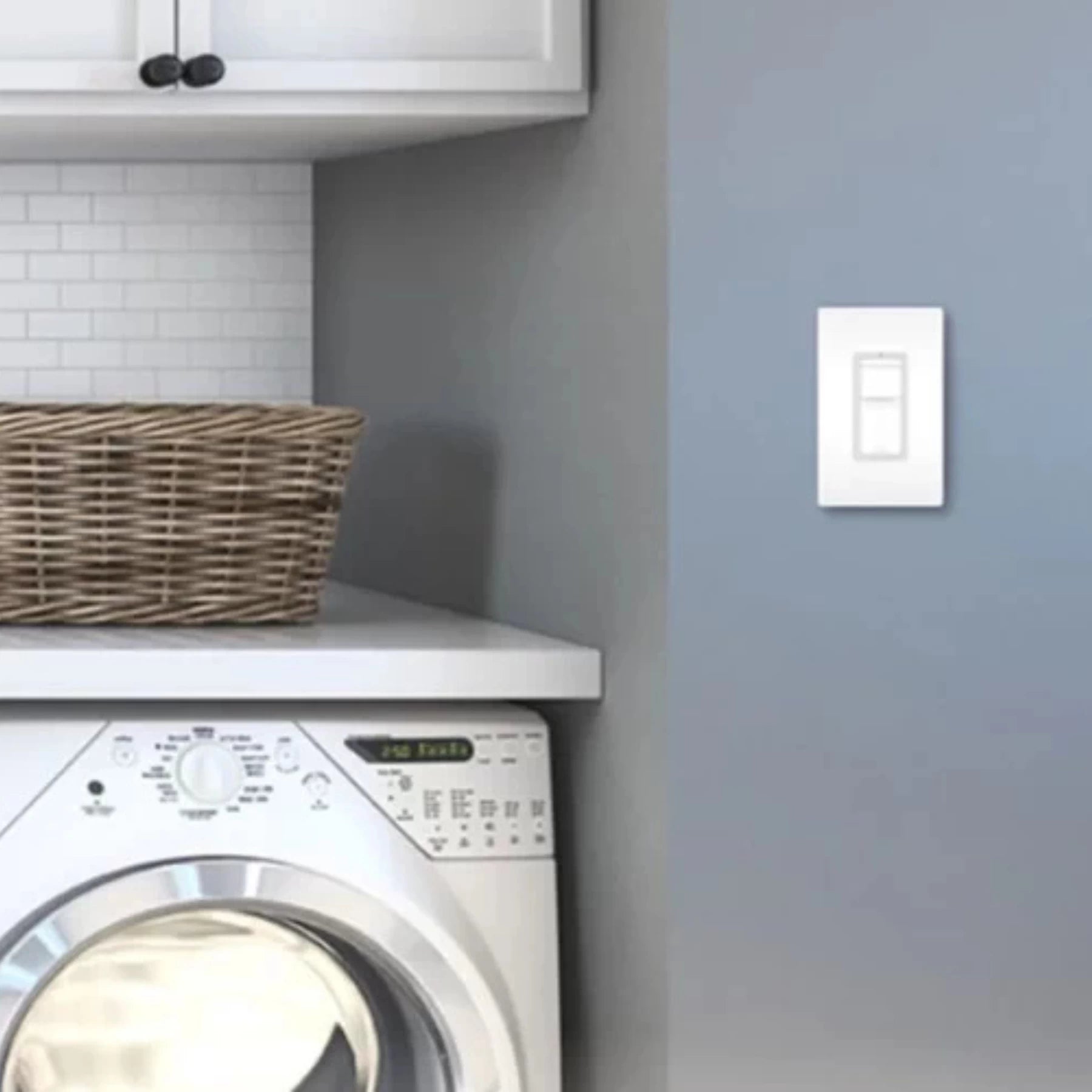



Maestro PIR Vacancy Motion Sensor LED+ Dimmer Switch, 150W, 120V, Single-Pole/3-Way, White
Maestro PIR Vacancy Motion Sensor LED+ Dimmer Switch, 150W, 120V, Single-Pole/3-Way, White
Available in stock (31)
Choose your location
enter a US zip code
Couldn't load pickup availability
About this item
About this item
- Controls CFL, LED, incandescent, and halogen load types
- Passive infrared motion detection with exclusive Lutron XCT Technology for fine motion detection
- 180 degree sensor field-of-view
- Up to 900 ft² major motion coverage and 400 ft² minor motion coverage
- Adjustable timeout (1, 3, 5, 15, or 30 minutes) and high/low sensitivity adjustment
Shipping & Returns
Shipping & Returns
Shipping: Enjoy free standard shipping on most orders over $99. (Exclusions apply for oversized & commercial items). We ship to the contiguous 48 United States.
Returns: We offer a 60-day return window for most items. Products must be in their original, unused condition with all packaging. (Exclusions: Special orders, clearance, and custom items).
We process payments securely and do not store credit card information.

Description
Description
Overview
The Lutron Maestro MSCL-VP153M vacancy sensor with LED+ dimmer combines intelligent motion detection with smooth LED dimming in a single-gang wallbox. Designed for architectural-grade lighting control, this vacancy-only sensor requires manual turn-on and automatically turns lights off when the room is vacant, ideal for California Title 24 compliance and energy-conscious applications.
Key Specifications
- Model: MSCL-VP153M-WH
- Control Type: Single-Pole or 3-Way / Multi-Location
- Sensor Mode: Vacancy (manual-on/auto-off only)
- Voltage: 120V AC, 60 Hz
- Neutral Required: No
- Sensor Technology: Passive Infrared (PIR)
- Load Capacity: 150W LED/CFL, 600W incandescent/halogen
- Color: White
Features & Benefits
- Vacancy mode operation: manual-on/auto-off for California Title 24 compliance
- Integrated LED+ dimmer with smooth fade-on/fade-off transitions
- Major motion coverage: 900 ft² with 180° detection pattern
- Adjustable timeout: 1, 5, 15, or 30 minutes
- Ambient light detection prevents lights from turning on in daylight
- XCT sensing technology for superior ambient temperature performance
- Multi-location capable with up to 9 companion dimmers or switches (MA-R or MSC-AD)
- Pair with Claro® wallplate for a clean, modern aesthetic (sold separately)
- No neutral wire required for installation
- 5-Year Limited Warranty
Applications
Ideal for premium residential spaces, hospitality environments, retail settings, and commercial applications requiring Title 24 compliance or where manual control is preferred. Perfect for bathrooms, closets, laundry rooms, pantries, offices, and hallways.
Specifications
Specifications
Dimensions
Documents
Style & Materials
Characteristics & Features
Electrical Information
Item Details
Warranty & Certifications
Frequently Asked Questions
What is the difference between an occupancy sensor and a vacancy sensor?
What is the difference between an occupancy sensor and a vacancy sensor?
Motion sensor switches utilize infrared radiation to monitor their surroundings. They emit energy forms such as light, microwaves, or sound to detect changes caused by movement. Most systems used in lighting and security are passive, meaning they primarily detect the infrared energy emitted by warm objects like human bodies.
Are occupancy sensors compatible with LED bulbs?
Are occupancy sensors compatible with LED bulbs?
Occupancy sensors and vacancy sensors are both used for detecting presence in a room, but they operate differently. Occupancy sensors automatically turn on the lights when someone enters a room and turn them off when no presence is detected after a set period. In contrast, vacancy sensors require someone to manually turn on the lights, but will automatically turn them off when the room is empty.
Do these sensors require a neutral wire?
Do these sensors require a neutral wire?
The primary distinction between a motion sensor light switch and a traditional light switch lies in their methods of activation. A traditional light switch requires manual operation to turn the lights on or off. Conversely, an occupancy sensor automatically activates the lights when someone enters the room and turns them off when it no longer detects any presence.
Can an occupancy sensor be used in a bathroom?
Can an occupancy sensor be used in a bathroom?
Occupancy sensors are designed to detect the presence of individuals or animals in a space and activate the lights accordingly, which can be combined with daylight sensors to enhance energy efficiency. On the other hand, daylight sensors adjust the lighting based on the natural light available, reducing the use of artificial lighting when not necessary.
Why do the lights turn off while I’m still in the room?
Why do the lights turn off while I’m still in the room?
Yes! Most motion sensors have adjustable sensitivity settings. This allows you to fine-tune the device to prevent false triggers or increase responsiveness in larger spaces.