

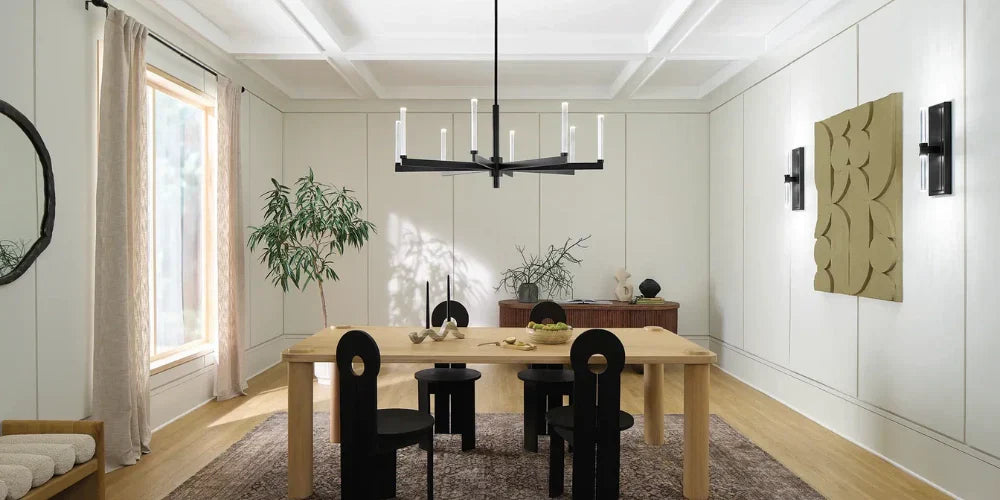
The Master Mixed-Metal Design Blueprint
To successfully execute a multi-finish hardware and lighting layout without creating visual clutter, implement this structural design breakdown:
- The 60/30/10 Proportional Split: Dedicate 60% of the room's metallic footprint to a dominant metal tone, 30% to a secondary contrasting accent, and the final 10% to a distinctive tertiary luxury element.
- Grounding and Sculpting: Use bold matte black to frame the room's vertical boundaries, or implement architectural matte white fixtures to build clean Scandinavian lines.
- Weaving Warm and Cool Metals: Soften the energetic reflection of polished chrome or brushed nickel hardlines by introducing the gentle, muted brushed gold tones of champagne bronze.
- Camouflaging Utility Assets: Match secondary functional devices to wall surfaces using light almond switch plates, muted plastics, or real cast metal plates to keep structural lines clean.
- Concealing Wall Imperfections: Deploy oversized, screwless multi-gang wall plate covers for holes to hide jagged drywall rough-ins and keep controls perfectly flush.
For decades, traditional residential construction followed a rigid hardware rule: every faucet, light fixture, cabinet pull, and hinge within a space had to be sourced from the exact same manufacturer finish batch. While this matching approach felt safe, modern design trends have shifted toward more dynamic, multi-layered environments. Today, sticking strictly to a single hardware finish can make a luxury master bath, premium custom kitchen, or formal living area look flat, dated, and uninspired.
However, moving away from matching finishes introduces an unexpected styling challenge. Mixing metals without a clear plan can easily result in an accidental patchwork appearance that disrupts the room's visual flow. Achieving a high-end, coordinated look requires analyzing how different metal properties, light reflections, and wall hardware interact. This technical guide outlines the layout principles for mixing matte black, gold, champagne bronze, white, nickel, and chrome hardware, and details how to integrate custom screwless wall plates to keep the focus on your premium design elements.
1. Breaking the Monotone: The Proportional Blueprint and Undertone Matching
The movement toward mixing metals stems from a desire to bring architectural depth and character back into custom living spaces. By blending contrasting elements, builders can highlight specific surfaces and establish a clear visual hierarchy across the room. Implementing dual finishes breaks the monotony of matching hardware to create a richer interior narrative.
To keep a mixed-metal space cohesive, design-build professionals implement the 60/30/10 proportional balancing framework. Allocate roughly 60% of the room's metallic surfaces to a primary dominant finish (such as cabinet hardware and plumbing infrastructure), assign 30% to a contrasting secondary finish (typically primary decorative lighting), and reserve the final 10% for a distinctive tertiary accent.
When mixing hardware properties, it is essential to coordinate their structural undertones. For example, high-sheen polished chrome delivers a cool, energetic reflection that pairs beautifully with minimalist, modern environments. Brushed nickel, conversely, carries soft, warm golden undertones that soften transitional spaces. Recognizing these subtle material differences allows specifiers to group hardware into intentional color families, ensuring the final layout looks deliberate rather than accidental.
2. High-Contrast Anchors: Matte Black and Matte White Applications
Establishing a compelling multi-finish room layout requires selecting a strong structural anchor. Modern palettes frequently rely on non-reflective black and white bases to ground the surrounding metallic layers.
The Timeless Beauty of Matte Black
Matte black acts as an exceptional grounding tool for a room's geometry. Because it absorbs light rather than reflecting it, black hardware draws clean, structural silhouettes against vertical wall treatments, deep accent tones, and plaster finishes. Black hardware provides a striking neutral anchor that pairs beautifully with natural wood finishes, warm earth tones, and industrial or mid-century modern silhouettes. Using matte black for overhead island pendants or eye-level wall sconces establishes a strong architectural frame across the upper portion of the space.

The Sculptural Canvas of Matte White
On the opposite end of the contrast spectrum, modern white finishes offer an endless array of styling paths for contemporary, country, or industrial spaces. Instead of treating white as a basic utility fallback, modern architects deploy matte white pendants, semi-flush mounts, and architectural wall brackets as clean, sculptural shapes. Matte white fixtures can be used to achieve an "invisible," seamless look that blends directly into light drywall planes, or they can be snapped against deep navy, forest green, or rich charcoal accent walls to emphasize pure geometric form.

3. Soft Radiance: Elevating Spaces with Gold and Champagne Bronze
The introduction of warm, radiant finishes adds immediate luxury to residential interiors, completely transforming the mood of formal spaces.
The Modern Twist of Gold and Natural Brass
Modern gold and natural brass finishes have completely shed the harsh, hyper-reflective characteristics of 1980s polished brass. Today's gold treatments utilize brushed, satin, and low-sheen textures to deliver a sophisticated, timeless look with a distinctly modern twist. These warm tones are highly effective for mid-century modern and updated industrial decorative lighting, casting a soft, golden reflection that enriches surrounding textiles and materials.

The Champagne Bronze Visual Bridge
Champagne bronze has emerged as a premium design trend engineered to coordinate seamlessly with upscale plumbing lines, including Delta and Liberty Hardware collections. This finish features a muted, warm brushed character that is both timeless and on-trend. Champagne bronze serves as an ideal visual bridge in mixed-metal spaces. Pairing a champagne bronze shower head or kitchen faucet with matte black framed enclosure doors creates an incredibly rich, tailored environment that perfectly balances warm and cool design elements.

4. Cool Reflection: Balancing Polished Chrome and Brushed Nickel
Cool metallic finishes remain the standard for high-acuity zones like master vanities, kitchen sculleries, and utility laundry stations. Balancing their reflective properties prevents these spaces from feeling sterile.
- Polished Chrome: Highly reflective, crisp, and mirror-like, polished chrome injects a cool energy into modern layouts. Because it bounces light actively, it should be paired with low-sheen accents—such as matte black ceiling lines or matte white cabinetry—to prevent overwhelming glare.
- Brushed Nickel: Softer and deeper than chrome, brushed nickel contains hidden warm undertones. This warmth makes it highly versatile for pairing with gold accent details, natural brass shelf brackets, or warm wood species across transitional layouts.

5. Blending the Infrastructure: Light Almond, Muted Plastics, and Screwless Plates
A frequent mistake during custom home renovations is ignoring the color of your electrical switches, dimmers, and wall boxes. Installing stark, bright white plastic outlets on a rich, custom-painted accent wall or an organic wallpaper pattern creates immediate visual friction, breaking up the clean lines of the room. The best residential designs treat wall devices as integrated architectural extensions rather than utility afterthoughts.
To keep the focus on your premium lighting choices, functional electrical devices must either blend perfectly into the background wall color or match the surrounding metal hardware. When working with warm wall finishes like beige, ivory, taupe, or soft off-whites, specifying light almond switch plates and lighting accessories allows your controls to visually recede into the paint layer. The subtle, muted look of light almond bridges the gap between warm wall coverings and metallic hardware accents.
For ultra-luxury spaces, designers upgrade standard utility controls using premium collections. The Legrand adorne line features a clean, screwless profile and interchangeable faceplate modules available in authentic cast metals—including Satin Nickel, Brushed Satin Brass, and Oil-Rubbed Bronze—as well as real wood textures like Macassar and true slate linen. For a sleek, contemporary feel, the Legrand radiant Collection offers a streamlined rectangular layout available in diverse, on-trend plastic and metallic finishes like Graphite, Dark Bronze, and classic Gray, making it easy to coordinate your switches directly with your main hardware themes.
Concealing Structural Gaps with Premium Frames
During a fast-moving construction or remodeling project, drywall cutouts around multi-gang electrical boxes or low-voltage rings are often over-cut, leaving jagged gaps exposed around the edges of the hardware collars. To fix these rough openings cleanly without undergoing messy drywall repairs, installers specify oversized screwless plates and robust wall plate covers for holes.
Devices like the Legrand adorne Frame System utilize a high-strength galvanized steel backing plate that screws directly to the junction box, automatically aligning the inner switches and outlets without manual twisting. The decorative, screwless outer faceplate then snaps firmly onto this metal sub-frame, extending slightly past standard contractor-grade dimensions to completely conceal rough drywall cutouts. Additionally, many of these high-end wall plates feature built-in Microban antimicrobial protection, keeping your high-touch surfaces cleaner and more durable over years of daily use.

6. The Comprehensive Finish Coordination Matrix
The following scannability matrix simplifies material sourcing by pairing popular wall paint trends with optimal lighting, plumbing, and electrical device finishes:
| Wall Paint Profile | Dominant Lighting Finish (60%) | Plumbing Companion (30%) | Hardware Accent / Detail (10%) | Wall Device Selection (Legrand) |
|---|---|---|---|---|
| Warm Alabaster / Soft Cream | Matte Black | Brushed Nickel | Brushed Satin Brass | Light Almond Switch Plates |
| Cool Slate Gray / True Charcoal | Polished Chrome | Matte Black | Polished Nickel | radiant Graphite / Gray |
| Deep Forest / Emerald Green | Champagne Bronze | Matte Black | Brushed Gold Elements | adorne Black Ink Plastic |
| Minimalist Bright White | Matte White Architecture | Polished Chrome | Natural Brass | adorne Gloss White-on-White |
| Muted Taupe / Warm Greige | Brushed Satin Brass | Oil-Rubbed Bronze | Matte Black Silhouettes | adorne Real Wood Macassar / Greige |

Conclusion: Executing the Multi-Dimensional Spec
Successfully implementing modern mixed-metal design trends across custom properties requires looking past simple, catalog-matched product lines. To protect your project from looking like an unplanned patchwork of leftover hardware, you must coordinate your fixtures using a clear framework of contrasting shapes, textures, and sheen levels. By grounding your vertical spaces with bold anchors like matte black or matte white, pairing warm champagne bronze or gold lines against cool reflective plumbing, and utilizing premium, color-matched screwless wall plates to conceal drywall gaps, you can build a beautifully cohesive space. This deliberate, data-driven approach to finish coordination ensures your home's functional controls blend away seamlessly, leaving your premium architectural design features to shine.


